85% of jobs are filled through networking. For international students trying to build a career in some new country, that statistic isn’t just motivating, it’s kinda urgent honestly. The professional connections you make during studying abroad tend to matter just as much as the degree itself.
Networking is one of those things that sounds totally obvious until you’re actually doing it, in a new country, in a second language, with a professional culture you’re still learning how to read. Most international students understand networking matters. Far fewer feel confident doing it, and
many do not start until the final semester when the pressure is already on.
The good news is that international students kinda are in a better spot than they sometimes think. You bring cross-cultural perspective, language strengths, and that kind of adaptability thing, which
87% of employers say they really value in people who’ve had international experience
. The challenge is not whether you have something to offer. It is learning how to put yourself in the rooms, physical and virtual, where those opportunities actually happen.
Why Networking Matters More Than Most Students Expect
The numbers basically say the same thing over and over. Like, 80% of professionals say networking is essential for career success, and
some studies also suggest 85% of roles
get filled through professional connections, not through standard open applications. Referrals only show up as 6% of all submitted applications, yet they end up driving 37% of all hires. So the math is pretty stark: a good referral really shifts your odds, versus dropping your CV into an
online portal with hundreds of other applicants.
For international students, this pattern gets even more noticeable. If you don’t yet have a local circle, you end up competing mostly through those formal applications. That creates a structural disadvantage versus local candidates who already know people inside the very organizations they
want to join. Building a professional network abroad is not just a career tip. It is how you level the playing field.
Knowing how to
improve your employability while studying
starts with recognising that your degree and your network need to develop in parallel; one without the other leaves significant opportunity on the table.
The Challenges International Students Actually Face
Its worth being honest about what makes networking harder for international students, because pretending the barriers do not exist, kind of doesn’t help anyone overcome them in the long run.
Language confidence -
even students with strong academic English still often feel less assured in casual professional conversation, where tone, humor and cultural references matter as much as vocabulary. So you might know the words but the situation still feels a little “off”.
Cultural differences in networking norms -
in some places, directly promoting yourself can feel awkward or like it is inappropriate. In others, being too reserved reads as disinterested.
Cultural adaptation takes time and a conscious effort
, and networking is one of those moments where the cultural gaps show up the clearest.
Unfamiliarity with local professional culture -
not knowing how LinkedIn is actually used in your host country, what to say at a career fair, or how formal to be in an email to a professional contact, can throw you off pretty fast, especially at the start.
Smaller starting network -
many local students arrive with school friends, family connections, and hometown ties already embedded in the professional world. International students are often starting from scratch, with fewer obvious entry points.
None of these are truly insurmountable. Still, acknowledging them helps you handle them more systematically rather than assuming the discomfort means you are doing something wrong.
Where to Start Building Your Network
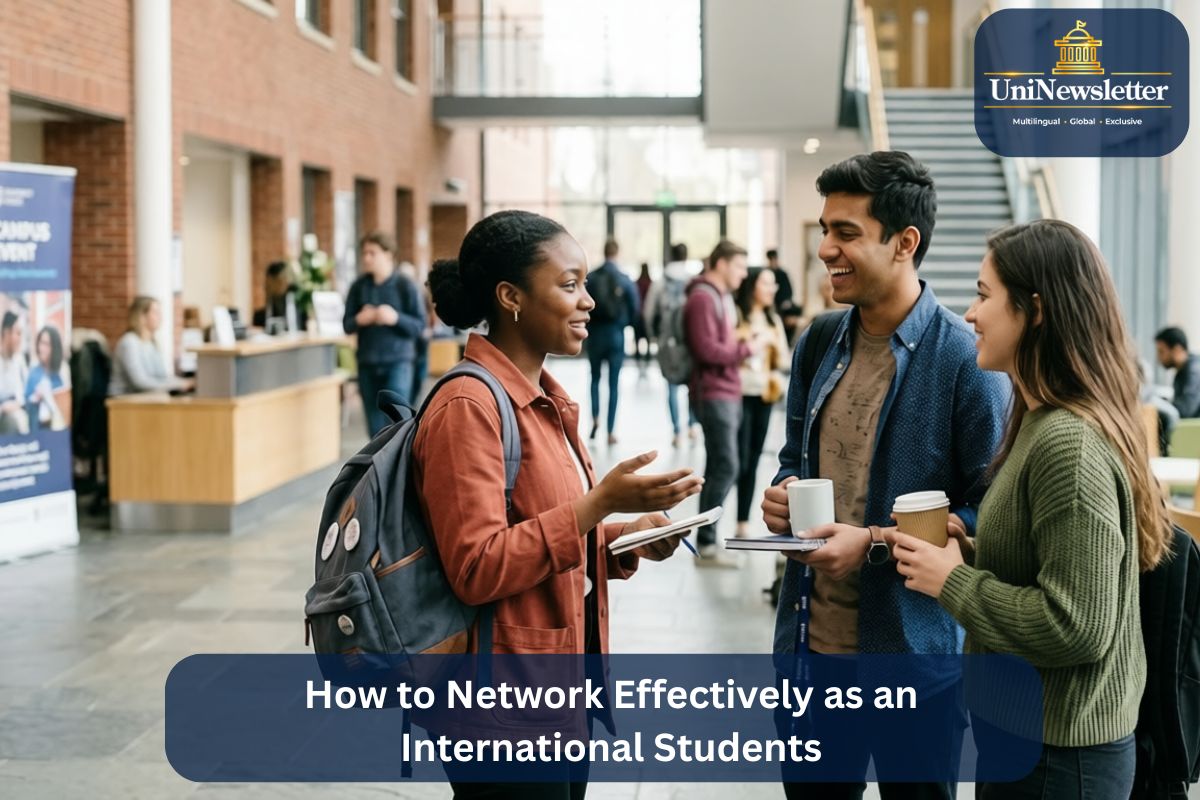
The most effective networking for international students happens closest to where you already are. Your university is the most underused networking resource most students have access to, and it is free.
Start with your department. Professors often have industry connections, research collaborations, and alumni relationships that they share pretty readily with students who show genuine interest. It's not just about “help,” attend office hours not only for academic support but to have a real
conversation about the field, in a sort of unforced way. Ask about what they’re researching, how they got there in their career path, and who they think you should reach out to next. Those conversations feel more natural than the whole formal networking event thing, and sometimes they lead
straight to introductions, with very little extra effort.
University career services, alumni networks, and student associations are also useful in the same kind of way and honestly they’re often underused.
NACE data shows
that 45% of students get an interview offer after attending a career fair. Still, a lot of international students skip those fairs because they feel underprepared. Going once with realistic expectations is better than not going at all. Recruiters at career fairs expect to meet people who are
still figuring things out; they’re not only looking for “perfect” candidates.
Professional associations in your field, whether it's engineering, business, healthcare, or the arts, usually offer student membership at reduced rates. They also give you access to events, mentorship programmes, and industry contacts that are outside that university bubble entirely, not just
another version of campus life.
Networking Online as an International Student
LinkedIn is, like the single most important professional networking platform for most fields globally and it’s especially useful for international students because it basically wipes out the geographic barrier entirely.
LinkedIn’s own data points
out that 89% of hiring managers say referrals matter when they’re filling a vacancy , and 35% of users have turned up new opportunities just from casual messaging on the platform itself.
A few things that really do work on LinkedIn for international students are: connecting with alumni from your university who are now working in your target country or industry. (They’ve got the same academic history, and usually they are open for a conversation.) Also joining groups that match
your field, then contributing to discussions instead of just lurking in the background. And then sending personalized connection requests to professionals whose work genuinely catches your attention, with one specific, short reason for why you’re reaching out instead of using that default,
copy paste type message.
The main shift is thinking of LinkedIn as a place for conversations, not a spot where you just drop your CV, and then wait.
Professional networks are built through steady, authentic engagement
, not from one single message asking for a job, like instantly.
How to Connect with Professionals Abroad
Informational interviews, asking a professional for about 20 minutes of their time, to learn about the way they got where they are, and their industry, with no hard agenda beyond learning, are one of the most effective and kinda underused networking approaches for students. Like, most
professionals will actually talk with students who reach out politely and in a targeted way. The message needs to be clear and short, kinda centered on what you want to understand from them, not so much on what you want from them in terms of a job, or a referral, or anything like that.
Then there are industry events, conferences, workshops, even the smaller ones can matter. These kinds of settings make real chances to meet people without the usual pressure.
Research from Oregon State University
shows that students sometimes land full time roles at companies like AbbVie directly through in-person conference networking, just by being there and showing genuine interest in the conversation, in the right room at the right time. And you dont need to jump to a massive national conference
either, you can replicate the effect with local meetups, alumni panels, and employer run campus events, same idea just on a smaller stage.
Also, follow up after any meaningful conversation is where a lot of networking quietly falls apart. A short follow up message within 24–48 hours, and it should mention something specific you talked about, is what turns a quick chat into an actual relationship you can keep building.
For Introverted International Students
Networking can feel way more difficult than it “should be” if you are introverted, and honestly many high-achieving international students are like that too. Some ways that tend to work better than just pushing yourself through events that drain you completely, like forcing the whole thing:
try one-on-one conversations, they’re usually much more comfortable than group networking events, so make those your priority. Also show up early, not late, because it’s easier to introduce yourself while the room is still small and not fully crowded. Before you attend anything, have two or
three questions you actually want to ask; otherwise, you’ll end up “improvising” right when anxiety peaks. Finally, remember listening well and asking strong, thoughtful questions is a networking skill by itself. You do not need to be the most talkative person there, if you connect properly
you can still leave a really strong impression.
One of the most consistent
factors in international student success
, academic and professional, is the quality of the support networks students build around themselves. Networking is not separate from that process. It is part of it.
Networking Mistakes Worth Avoiding
Waiting until your final year -
the best networks take time to develop. Start in your first semester, even if conversations feel premature
Only connecting with people from your home country -
comfort is understandable but limiting. Diverse networks open more doors
Asking for things before giving anything -
share some articles , congratulate the connections on their achievements, and kinda engage with what they post before you make any request, like don’t jump straight in
Treating networking as transactional -
the relationships that end up creating opportunities are built on real curiosity, not on some very obvious agenda or script, you know
Not following up -
most networking conversations lead nowhere not because the person was not interested, but because nobody maintained the connection
Conclusion
Building a professional network as an international student isn’t really about being the most confident person in the room or always knowing exactly what to say — that part matters far less than people think. It’s mostly about showing up consistently, having genuine conversations, and treating
every interaction as the beginning of a long-term relationship rather than a quick transaction. At
UniNewsletter
, we often see that students who build strong networks while studying abroad rarely succeed because they are “natural networkers.” Most are not. Instead, they tend to start earlier than feels necessary and focus more on understanding and supporting others than on what they might gain in
return. That approach consistently proves valuable across cultures, industries, and every stage of a career.

 26-05-2023
American University of Ras Al Khaimah
26-05-2023
American University of Ras Al Khaimah


 Featured Video