
Published on Apr 2026
Share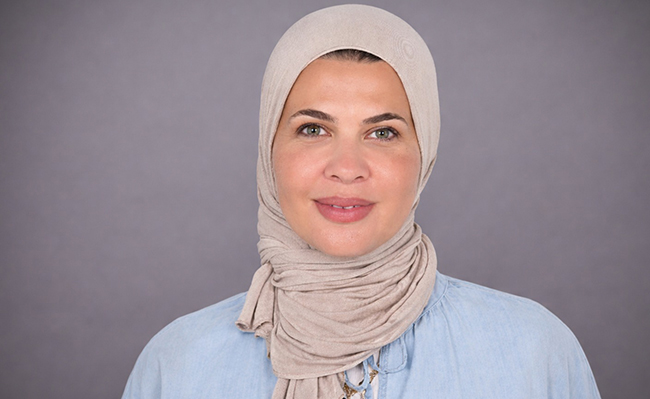
Dr. Mahinour Ezzat, SFHEA Founder, Advance HE Gulf Fellowship Network Director Teaching and Learning, Ajman University, United Arab Emirates (UAE)
Across the Gulf, universities are investing heavily in strategy, digital transformation and global positioning. Yet one of the most powerful forces shaping the future of higher education rarely appears in institutional reports.
It is the work of educators often unseen, often unmeasured, happening quietly behind classroom doors. A faculty member redesigns an assessment to make it more authentic. Another mentors a colleague struggling with AI integration. A program leader introduces inclusive teaching practices that change student engagement overnight. These shifts alter student experience profoundly, yet they frequently remain invisible beyond departmental walls.
The real question facing higher education in the region is not whether transformation is happening. It is whether we are connecting it.
What began as a vision to connect educators across the Gulf has now evolved into a regional platform for influence, collaboration and recognition. The Advance HE Gulf Fellowship Network was founded on a simple conviction: excellence must be visible, shared and collectively strengthened.
Networks change the scale of impact.
When educators work in isolation, innovation remains local. Reflection remains private. Recognition remains internal. But when those same educators enter a structured regional network, something changes. Practice becomes visible. Dialogue becomes cross-border. Professional identity becomes stronger and more confident.
I remember a conversation during one of our early network gatherings. A mid-career faculty member, recently recognized as a Fellow, shared her reflection on redesigning assessments to reduce academic misconduct. She described how she shifted from traditional exams to applied, context-driven tasks. Her voice carried uncertainty at first as though she was not sure whether this work was significant enough to share.
As others responded asking questions and offering insights, her posture changed. What she had seen as routine became recognized as leadership. Weeks later, another faculty member from a different institution adopted a similar approach after that discussion. What began as a single classroom adjustment became a cross-institutional conversation about integrity and authentic assessment. This is the quiet power of networks. They turn isolated practice into shared momentum.
The Gulf Fellowship Network was established to create more than a community. It was designed as professional infrastructure. Recognized Fellows, aspiring Fellows and institutional leaders engage in structured dialogue grounded in a shared professional reference point, the Professional Standards Framework (PSF 2023) . Its availability in Arabic has strengthened this connection. Translation here is not symbolic; it enables educators to articulate impact in language that resonates culturally and professionally.
Yet the framework alone does not drive transformation. The network does. The PSF provides vocabulary and standards. The network provides amplification. Within the network, faculty illuminate work that often goes unnoticed: mentoring initiatives, curriculum reform, inclusive teaching strategies and ethical AI experimentation. When these efforts are shared within a trusted regional space, they gain legitimacy and influence beyond their original context.
This is where recognition becomes action.
When I founded the Advance HE Gulf Fellowship Network, the intention was never simply to create a space where educators could gather. The Gulf has no shortage of conferences or committees. What it lacked was a sustained platform where educators could connect across institutional walls, speak a shared professional language and build something larger than any single institution could generate alone.
What the Gulf Fellowship Network makes possible is peer visibility. When an educator at one institution sees a colleague at another navigating the same challenges and understands how they have worked through it, something shifts. Excellence stops being exceptional. It becomes a reference point. And reference points, shared widely enough, become a norm.
This is how networks accelerate transformation. Not through top-down mandates but through the normalization of what good practice looks like, which when repeated across enough contexts, starts to feel like the baseline rather than the exception.
That evolution did not happen by design alone. It happened because the educators who joined brought more to the network than their credentials. They brought their questions, their frustrations, their innovations and their commitment to something that is easy to undervalue in systems built around research metrics: the craft of teaching.
The upcoming Gulf Fellowship Network Forum marks a milestone in this evolution. Building on the momentum of the inaugural gathering, the second edition expands to integrate the Scholarship of Teaching and Learning Conference and the Academic Integrity Symposium. This integration reflects a deeper understanding: excellence in teaching is inseparable from scholarship and integrity. These conversations cannot remain fragmented.
The Forum is not simply a convening. It is a visible signal that teaching excellence across the region is no longer an individual pursuit. It is a shared responsibility and a strategic priority. More importantly, it demonstrates institutional commitment. When universities invest in engaging with regional networks, they affirm that empowered educators are foundational to student success. They recognize that leadership in higher education is distributed not confined to titles or executive offices.
Networks redistribute influence.
Within the Gulf Fellowship Network, leadership emerges through dialogue. A newly recognized Fellow can influence senior leadership through reflective insight. A department head can learn from a colleague in another country navigating similar accreditation pressures. Influence flows horizontally, not just vertically. In a region characterized by rapid expansion and ambitious national visions, this horizontal influence matters. Institutions are scaling programs, integrating AI, pursuing international partnerships and responding to workforce demands. Policy frameworks provide direction, but culture sustains quality.
Networks build culture. They create psychological safety. They allow educators to share uncertainty as well as success. They normalize reflective practice. They anchor excellence in community rather than competition.
The growth of the Gulf Fellowship Network signals a broader maturation of the region’s higher education landscape. The Gulf is not merely adopting international standards; it is creating platforms that contextualize and advance them. It is shaping conversations about integrity, scholarship and pedagogical innovation in ways that reflect both local realities and global ambition.
Higher education reform is often evaluated through metrics and infrastructure. Yet its durability depends on something less tangible: connection. Frameworks matter. Standards matter. Strategy matters. But without professional networks, transformation remains fragmented. With networks, it becomes collective. And when collective effort is grounded in shared language, visible recognition and cross-border dialogue, excellence stops being episodic. It becomes embedded.
The power of a network is not in its size. It is in its ability to ensure that what happens in one classroom does not remain there. That is how culture shifts. That is how leadership spreads. And that is how transformation endures.