Recruiting international students is one thing. Keeping them is another.
Universities
around the world invest significantly in international recruitment, marketing, agents, campus visits, and scholarship programmes. But the conversation around what happens after a student arrives is often quieter, less resourced, and less strategically considered than the recruitment effort
that brought them there.
That gap matters. Not just financially, though the financial implications are real, but because every international student who drops out represents a person who came somewhere new, often at great personal and family sacrifice, and didn't get the support they needed to succeed.
UNESCO
estimates that more than 6 million students from different countries are currently studying in international programs and this number keeps increasing. Universities face a fundamental problem because student enrollment increases without corresponding retention resources, which leads to student
attrition and financial losses and damage to institutional prestige.
What Is International Student Retention?
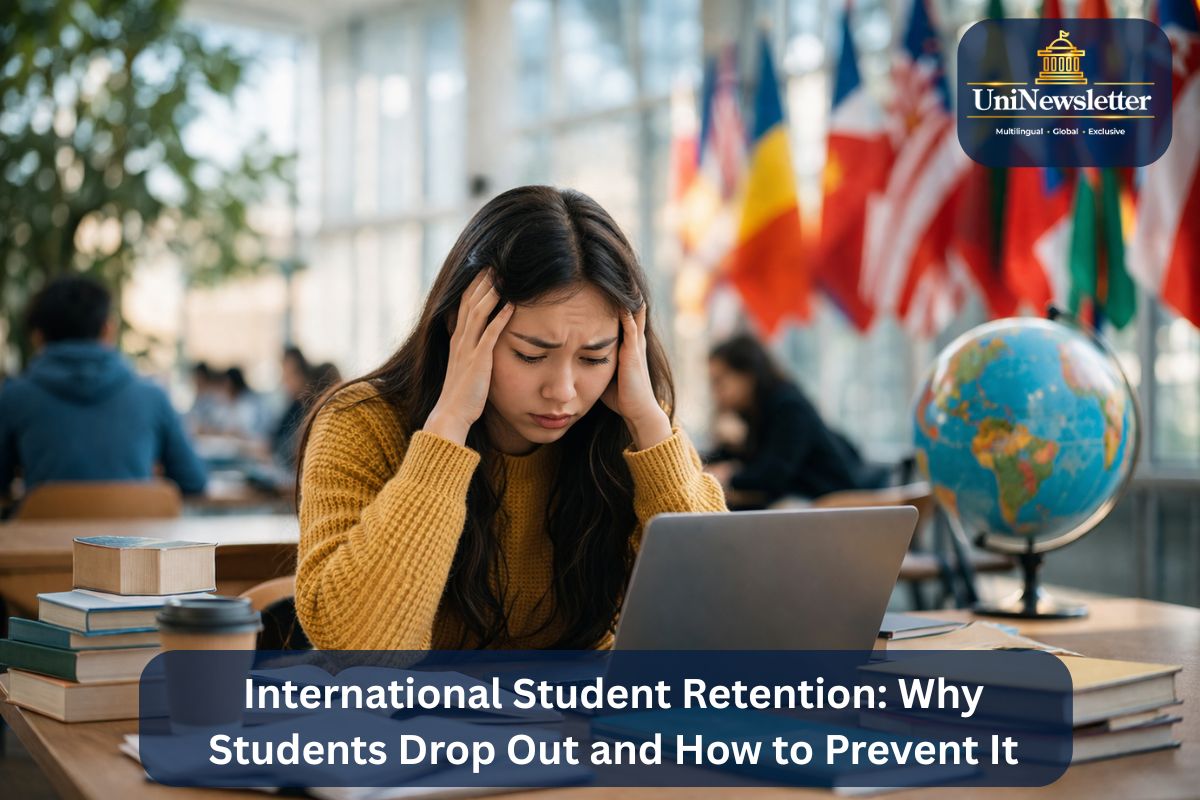
The university success of international student retention depends on its capacity to maintain international students until they complete their degree programs without dropping out or transferring to other institutions or leaving mid-semester.
The metric measures more than academic performance because it shows how well an institution provides support to students during their entire study abroad experience, which includes academic, social, financial, and emotional needs. The international program of a university requires sustainable
development through solid incoming student recruitment and successful student retention. The institution operates as a revolving door system.
Why International Students Drop Out
The reasons international students leave before completing their degree are rarely simple , and they rarely exit programs for one reason. The first departure points for international students who quit school before completing their studies establish three major patterns which universities can
detect through their tracking systems.
Academic Transition Challenges
International students arrive at universities because their home academic systems proved successful, but they discover that the academic system here requires critical thinking skills and group work participation and active student involvement instead of traditional memorization and individual
testing practices.
The study conducted by
HESA
discovered that international students withdraw from their first-year studies at higher rates than other students because their academic adjustment problems serve as the main reason for their withdrawal. The transition becomes genuinely difficult without active support when students who score
high on English proficiency tests need to understand academic writing standards and discipline-specific vocabulary requirements.
Cultural Isolation and the Belonging Problem
The most crucial challenge to face is social isolation which people discuss the least. The process of developing friendships requires students to learn about new social rules and different ways of communicating and informal relationship-building methods all while completing their academic
responsibilities. People experience continuous problems because
language barriers and cultural differences
exist. Research shows that students who experience belongingness have a higher probability of graduation while students who lack this connection face increased risk of dropping out.
Financial Pressure
International students pay premium fees with no access to domestic support systems in cities where living costs frequently exceed pre-arrival expectations. The
NAFSA
organization ranks financial difficulty as one of the top five reasons international students consider withdrawing from their studies. Students decide to leave because the situation has become impossible for them to continue yet this option does not reflect their actual desires.
Mental Health and Wellbeing
Distance from family, cultural adjustment, academic pressure, and financial stress combine into a mental health burden that goes underreported and underaddressed. International students experience more psychological distress according to the American College Health Association because they
face cultural help-seeking barriers and language difficulties and they lack knowledge about available resources. The research examines
how universities provide mental health support to international students
.
Inadequate Onboarding and Support
Students who arrive without knowing what support exists, where to go when things get hard, or how to navigate the institution's systems are starting at a disadvantage. The campus map which students learn during their orientation day does not provide them with complete knowledge to understand
the campus. Retention starts with proactive, ongoing engagement, not a one-off welcome event.
The Impact on Universities - Why This Isn't Just a Student Issue
Student retention in higher education is a strategic decision rather than a mere pastoral issue.
Every student who withdraws represents lost tuition revenue, but the financial impact doesn't stop there. High dropout rates affect league table rankings, which affect future recruitment. They generate negative word-of-mouth in the source country communities that institutions depend on for
international applications. And they attract regulatory scrutiny in countries where visa compliance is tied to enrollment continuation.
QS research
suggests that reputation and word-of-mouth from existing and former students are among the top factors influencing international student university choice. A student who left unhappy doesn't just represent lost revenue; they represent a recruiting liability in their home market for years.
International Student Retention Strategies That Actually Work
International student retention needs
a shift from its current reactive approach toward proactive methods that develop systems which identify students at risk of withdrawal before they reach that critical point and establish support systems which offer real accessibility instead of mere theoretical availability.
Pre-arrival preparation programmes -
online modules, connection with current students from the same country, clear expectations about academic culture and what will be different, significantly reduce the shock of transition. Students who arrive knowing what to expect adapt faster than those who don't.
The process requires
multiple onboarding
sessions which extend beyond one orientation day. The first six weeks of a student's first semester are the highest-risk period for withdrawal. The structured touchpoints which include academic check-ins, social events, and peer mentor meetings make a measurable impact during this time period.
Early alert systems that flag students who are disengaging, missing classes, not submitting work, and not logging into learning management systems allow intervention before the situation becomes critical. Research from the
National Centre for Student Retention
found that early intervention programmes can reduce first-year dropout rates by up to 25%. The data is available. Using it proactively is the difference.
The ideal peer mentoring program for international students should match new students with senior students who share their cultural background. The program has two main benefits because it helps students feel more connected and it supports their academic performance through its implementation.
Accessible, culturally aware counselling services
that students really use. This entails not only mental health services promotion, mental health services use normalisation, support provision in multiple languages as far as possible, but also the removal of barriers that hinder students from seeking help when they need it.
Financial hardship support measures -
emergency grants, installment payments, access to food banks, legitimate part-time job opportunities references, all of which students are aware of before they encounter serious problems. The student who is quietly drowning in financial stress and doesn't know there's help available is the one
who disappears mid-semester without telling anyone.
International student retention strategies for keeping students engaged
covers the operational detail behind several of these approaches, and the evidence base for each is strong.
The Role of Technology
Technology does not substitute human assistance because it enables people to interact with others through multiple channels while maintaining their ability to provide ongoing support through data-driven methods which become challenging to execute in person because of staff-to-student ratios.
Learning management systems track student engagement through their data which detects early signs of student disconnection from their studies. Automated systems in student success platforms handle check-in procedures while they identify students who need help and direct them to the suitable
assistance. International students gain access to social networks through community platforms which link them with their colleagues and alumni and national student organizations to create social structures that formal programs cannot establish.
The most effective institutions use technology to identify who needs support and to make accessing that support as frictionless as possible. They don't use it as a substitute for actual human connection.
Building a Retention-First Culture
The shift that the most successful institutions have made isn't adopting a new programme or a new technology. It's changing how they think about the relationship with international students, from transactional to relational.
That means
building recruitment and retention as connected strategies
rather than sequential ones. It means measuring retention as a key performance indicator with the same seriousness as enrolment numbers. This will require us to provide support to student success teams in accordance with the number of international students they are helping. Besides, it
entails forming channels of communication, sincerely paying attention to the needs of students in difficulty, and leveraging that data to better the education system for the students who will follow.
Reducing student dropout rates isn't a pastoral nicety. Universities that aim to keep their global image, their place on the ranking charts, and the confidence of the international student populations they source from should consider this as a critical business decision.
The Bottom Line
International students choose to study abroad at significant personal cost and considerable personal courage. The institutions that retain them aren't just the ones with the best academic programmes, they're the ones that build genuine systems of support around students once they arrive.
The dropout problem is solvable. The data on what works is clear. The gap, in most cases, isn't knowledge, it's prioritisation.
Explore more resources for universities navigating international student success and retention at
UniNewsletter
.

 26-05-2023
American University of Ras Al Khaimah
26-05-2023
American University of Ras Al Khaimah


 Featured Video