Why is it that some universities seem to "own" the global conversation while others, equally prestigious, remain
local secrets?
In the modern landscape of Higher Education, the differentiator isn't just a research budget or a low acceptance
rate. It is a concept called "Academic Diplomacy." For years, this was a term whispered in the halls of government
and foreign ministries. Today, it is the most powerful tool a university has to ensure its survival and influence in
a fractured world.
At
UniNewsletter , we believe that the bridge between being a
"school" and being a "global power" is built through narrative. When universities master academic diplomacy in
higher education, they stop being observers of global events and start being the architects of them.
But there is a catch: Diplomacy doesn't happen in a vacuum. It requires a stage. That stage is the media.
What is Academic Diplomacy in Higher Education? (A Layman’s Guide)
To put it simply, academic diplomacy is the use of education, research, and institutional prestige to build
positive relationships between countries. While a diplomat at an embassy handles official state business, a
university handles "people-to-people" business.
International Students who study abroad become more than service users because they represent their home cultures
as ambassadors. The London laboratory and the Lagos laboratory establish trust between their research teams through
their data exchange which exceeds their data sharing.
The
European Association for
International Education (EAIE) defines this shift as moving from "competition" to "collaboration for the
global good." It’s the difference between saying "We are the best" and "We are essential to the world’s progress."
Universities as Instruments of Soft Power
Joseph Nye introduced the term "Soft Power" to describe how countries use their attractive qualities to achieve
their objectives without needing to force others. The most authentic demonstration of soft power exists within the
domain of higher education.
The process of maintaining cultural ties developed by foreign education lasts throughout a leader's life after they
complete their studies. This isn't an accident. It is the result of long-term
university global engagement strategies .
However, soft power is fragile. It requires visibility. If your university is doing incredible work but no one
outside of your immediate region knows about it, your "power" is effectively zero. This is why universities and
academic diplomacy must be linked to a robust media strategy. You must turn your intellectual wealth into a global
currency that people can actually "spend" in their daily conversations.
The Role of Media in Higher Education Branding
For too long, university "branding" has been about logos, slogans, and glossy brochures filled with smiling
students on grassy lawns. This is PR, not diplomacy.
The role of media in higher education branding in a diplomatic context is about authority. It’s about ensuring that
when a global crisis hits, whether it’s a pandemic, a financial collapse, or a climate disaster, the media turns to
your experts for the solution.
Reputation Beyond the Rankings
Rankings are a "lagging indicator." They tell you where you were last year. A
strategic media presence is a "leading indicator." It tells the world where you are going. By
positioning your faculty as "thought leaders" in international outlets like The Guardian, The New York Times, or Al
Jazeera, you are bypassing the rigid metrics of rankings and speaking directly to the people who influence global
policy.
According to a
study by the Council on
Foreign Relations , the presence of international scholars in a country's media significantly improves that
country's "favorability" rating abroad.
Education Diplomacy Strategies: How to Use the Media
How do you actually do this? It isn't about buying ads. It’s about building an ecosystem where your institution is
a "generator" of news, not just a "subject" of it.
1. Media Partnerships in Higher Education
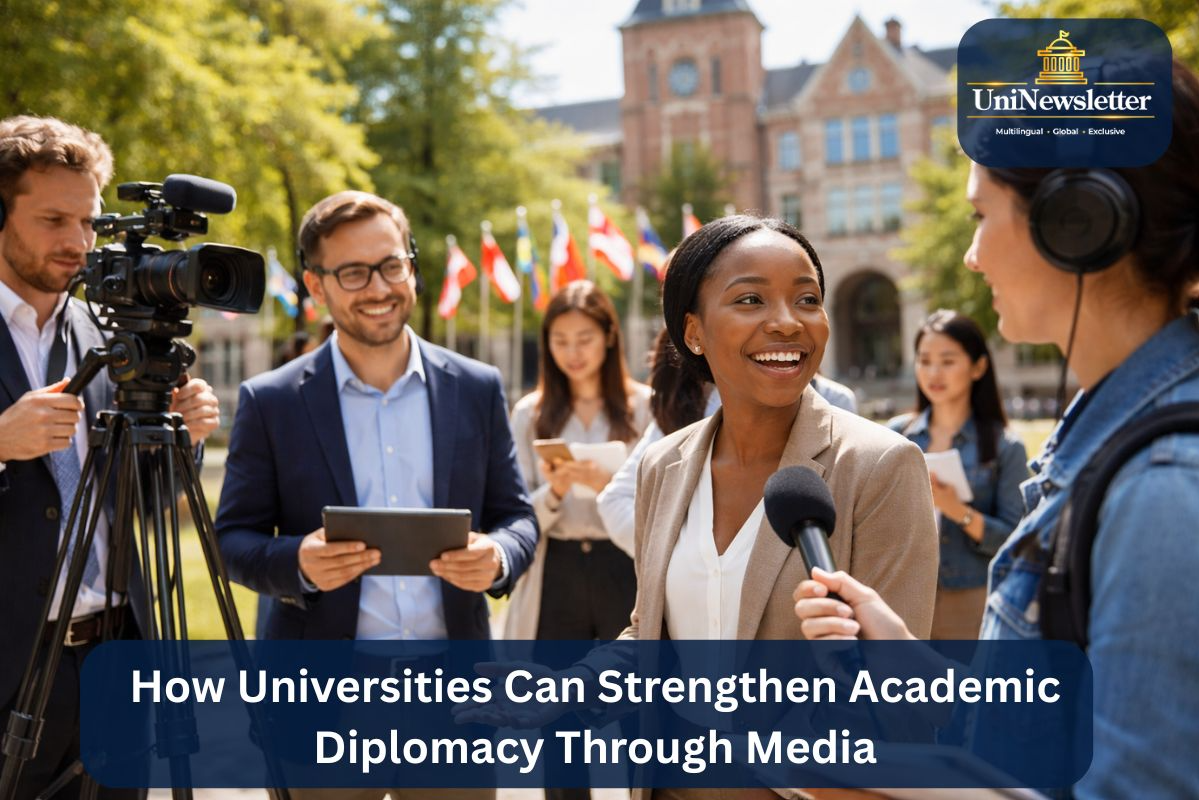
Higher education institutions develop their strategic media partnerships beyond their initial press release. Your
organization can work with an international media organization to develop a documentary series based on your
research or create a shared digital platform where your professors will provide daily analysis of global news
events. Your institution's international standing receives validation through these partnerships which demonstrate
your status as a worldwide institution.
2. International Academic Collaboration Strategies
Collaboration is the heart of diplomacy. When two universities from traditionally rival nations work together, the
media story shouldn't just be about the "science." It should be about the "bridge." Highlighting
international academic collaboration strategies shows that the university is a neutral ground
where the world’s problems can be solved regardless of politics.
3. Training the "Global Voice"
Most professors are trained to write for journals, not for the 6 PM news. An effective internationalization
strategy in universities includes "media training" for faculty. If an expert can explain a complex geopolitical
issue in layman's terms to a global audience, they have just performed an act of academic diplomacy.
The Digital Frontier: Measuring Global Influence
In the past, we measured influence by the number of newspaper clippings. Today, we measure it through "Global
Reach" and "Digital Sentiment."
Universities must track how their message is being received in different parts of the world. Are your International
Students acting as advocates for you on social media back home? Is your research being shared by policymakers in
different languages?
Using tools like
Altmetric allows
universities to see the "real-world" impact of their work beyond just citations. This data is the "intelligence"
that fuels further higher education global influence.
Challenges: The Risks of the Spotlight
Using media for diplomacy isn't without risk. In a "post-truth" world, universities can become targets for
political polarization.
Ethical Considerations: The distinction between diplomacy and propaganda exists as a subtle boundary which
universities need to preserve their academic integrity. The purpose of the process is to educate people while
making them believe the information presented is correct.
Equitable Engagement: Diplomatic media strategies must be inclusive. It’s not just about Western
universities "teaching" the rest of the world. The process involves exchanging information between two parties.
The
UN Sustainable Development Goals SDG 17 The UN
Sustainable Development Goals SDG 17 require all international partnerships to establish their relationship
through mutual respect and their partners.
The Future of Academic Diplomacy in a Digital World
As we look toward the next decade, the role of the physical campus is changing. The "Global University" of the
future is a digital entity.
The most successful institutions will be those that have mastered the
art of global academic engagement . They will be the ones whose "media footprint" is as large
as their physical campus.
Through dedicated social media campaigns universities can establish their academic research partnerships with
international institutions as essential components of their global presence. The organizations function as "safe
harbors" which protect knowledge, "translators" who simplify complicated information, and "diplomats" who work
toward a better tomorrow.
Conclusion
The "Ivory Tower" period has ended because universities need to function as "Glass Towers" which provide public
access and maintain worldwide connections through their media presence.
Academic diplomacy serves as your strategic framework for university presidents who want to expand their
institutions' worldwide recognition and for communications directors who wish to advance beyond traditional press
release methods.
At UniNewsletter we provide institutions assistance to navigate this transition process. Our organization builds
diplomatic connections through our news reporting which covers the experiences of International Students and their
research work throughout the next hundred years of Higher Education.

 26-05-2023
American University of Ras Al Khaimah
26-05-2023
American University of Ras Al Khaimah


 Featured Video