Have you ever looked at your international enrollment numbers for the semester and still felt a sense of unease
about the next three years? It is a common feeling among university leaders right now. That nagging doubt usually
isn’t about your current sales or recruitment team; it’s a strategic visibility problem. The world of Higher
Education is moving faster than the paperwork can keep up. Between shifting visa caps, changing student priorities,
and the sudden explosion of AI, it is easy for a university to feel like it is running on a treadmill, moving fast,
but not actually getting ahead of the curve.
This matters because the "old way" of doing things, relying on a steady stream of International Students from one
or two major countries, is becoming a high-risk gamble. When the global landscape is this volatile, staying informed
isn't just "admin work" or a monthly task; it is the control tower that keeps your institution from flying into a
storm.
At
UniNewsletter , we help universities stay ahead of these
shifts by tracking the forces shaping global student mobility and institutional strategy. Let’s look at the actual
trends shaping the future of international education and how universities can stop reacting to crises and start
leading the conversation.
Understanding the Future of International Education
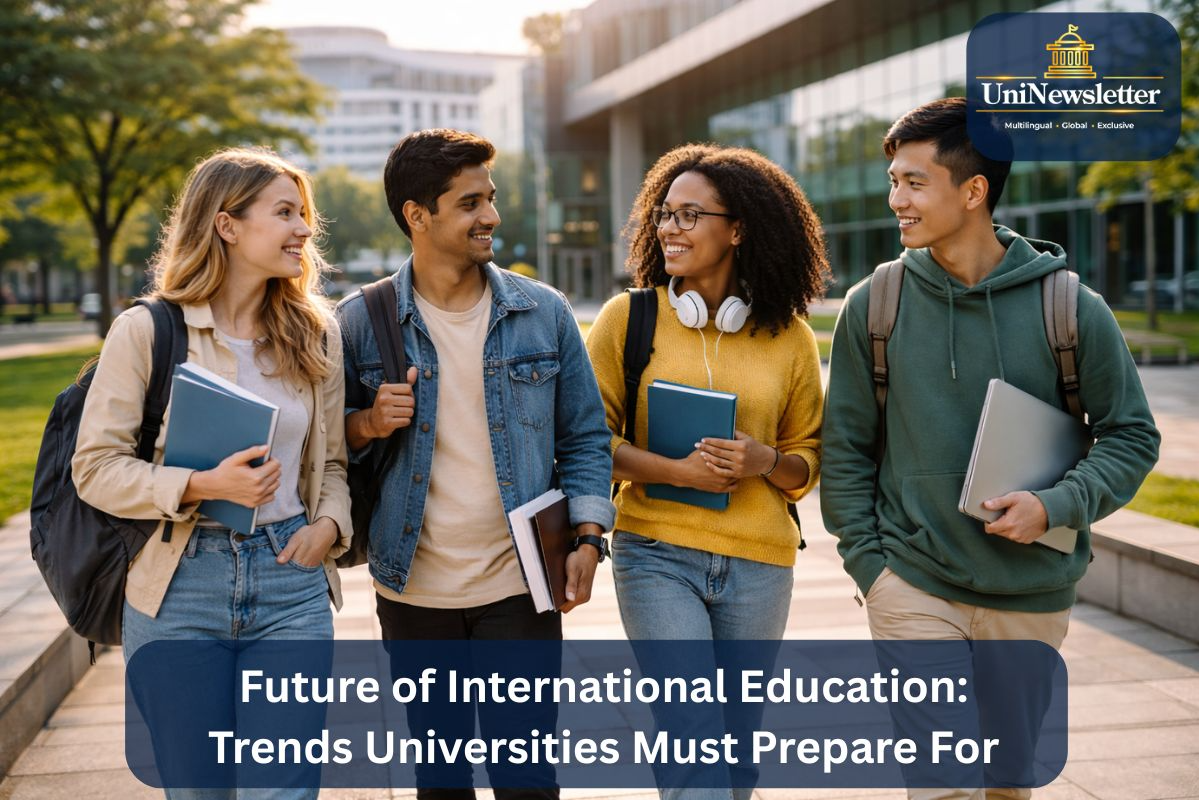
If we’re being honest, the future of international education isn't just about moving students from point A to point
B anymore. For a long time, the industry was built on a simple "export" model. But today, the "What is the future of
international education?" The question has a much more complex answer. It’s about "presence."
Students today want more than just a degree; they want an identity that encompasses more than just physical
location. According to data from
IIE’s Open Doors Report , physical
mobility is improving, but students are looking for more than physical mobility; they are looking for security
through “hybrid” forms of education. The students require protection against their academic progress being disrupted
by border closures and visa restrictions.
Global Higher Education Trends Shaping the Future
When we look at global higher education trends, the biggest shift is the move away from "prestige" and toward
"proof." In the past, a university’s age or the beauty of its campus was enough to win over a family. Now, families
are looking at ROI. They want to know about job placement rates and industry partnerships while they also want to
determine if the curriculum prepares students for jobs that will exist in 2026 .
We are also seeing a massive trend in "Regional Hubs." Countries that used to be "source" markets are now becoming
"destination" markets. The Western universities face competition from each other and from affordable high-quality
educational programs which Malaysia, Germany and the UAE provide.
International Student Mobility Trends
How will international student mobility change in the future? The data tells us it is becoming "multi-directional."
The
UNESCO Institute for Statistics points out that while the
total number of mobile students is rising, the "Big Four" (US, UK, Australia, Canada) are seeing more competition
than ever.
International student mobility trends show that students are becoming "value-shoppers." They are looking at the
total cost of living, the ease of the visa process, and the
availability of scholarships . If your university is only looking at one demographic, you’re
creating a blind spot. Diversification is no longer a "goal"; it is a survival strategy.
Digital Transformation in International Education
Digital technology is no longer just an educational tool in the classroom, but is being used to bridge the gap
between students in smaller locations and their higher education institutions located all around the world. The
concept of digital transformation of international education is focused on breaking down the barriers that make
studying abroad as difficult as it is for many students.
We’re seeing that
students in the Middle East and other growing markets aren't just "okay" with AI; they expect
it. Students need artificial intelligence support for their applications which should include continuous digital
tutoring and
online academic activities that create a campus experience before they start their journey to
campus.
Challenges Facing International Education
The upcoming journey presents numerous difficulties which make progress impossible because all current obstacles
remain active. The international education system must contend with actual challenges which exist beyond the
university's ability to manage them.
The "Regulatory Fog": Governments change their minds on post-study work rights overnight, leaving
universities to explain the mess to angry students.
The Affordability Crisis: As global inflation bites, the "middle class" of international education is
shrinking.
Digital Fatigue: Technology provides multiple benefits yet people find it difficult to establish human
connections in a world that prioritizes digital communication.
These aren't just "problems to solve"; they are the environment we now live in. The universities that thrive are
the ones that build "risk management" into their core recruitment strategy.
Universities Preparing for Future Education
The question about how universities should prepare for future educational needs needs to start with a "recruitment"
method and transition into a "partnership" approach.
Universities need to stop treating agents as just a sales force and start treating them as strategic partners. They
need to invest in
partnerships with other global institutions to
offer dual degrees and TNE (Transnational Education) programs. As the
British Council's TNE reports suggest, the future is about taking the education to the
student, rather than always waiting for the student to come to you.
Global Education Trends Universities Must Prepare For in 2026
By 2026, the "Standard Four-Year Degree" will have serious competition from "Stackable Credentials" and
micro-skills. The
World Economic Forum
predicts that half of all employees will need reskilling by 2025.
For global higher education trends, this means universities must become more "liquid." You have to be able to offer
a student a 6-month specialized certification that can later be "stacked" into a full Master’s degree. If your
institutional structure is too rigid to allow this, you will lose out to more agile, private competitors.
Role of Partnerships and Collaboration
No university can solve the "skills gap" or the "visa gap" alone. The future trends in higher education are all
leaning toward collaboration. The process involves sharing research materials and student support services between
different countries. Your institution establishes protective measures through its
partnerships with both businesses and other educational institutions . The various markets in which you establish partnerships will protect your
organization from market downturns which affect any single market.
Building Resilient and Future-Ready Universities
A resilient university achieves its financial goals through its strategic capacity to understand all aspects of its
operations. You need to know exactly where your students are coming from, why they are choosing you, and what they
plan to do the day after they graduate.
According to the
OECD's Education at a Glance
report, educational institutions are most successful if they focus on building multiple revenue streams and a
quality and resiliency model rather than seeking unlimited growth through unrestricted growth.
Conclusion
The future of international education shows positive prospects for all institutions that will reveal their
unrecognized limitations. The goal exists beyond filling incoming semester seats because it aims to create a
worldwide community that will endure upcoming changes throughout the next ten years.
At UniNewsletter, we help
university leaders see through the noise. The
most successful institutions in 2026 will achieve their goals through trust development and their ability to provide
flexible options rather than through their capacity to spend money on advertising.
It is time to stop guessing and start building for the future.
Explore Global Education Trends!

 26-05-2023
American University of Ras Al Khaimah
26-05-2023
American University of Ras Al Khaimah


 Featured Video