
Published on Sep 2025
Share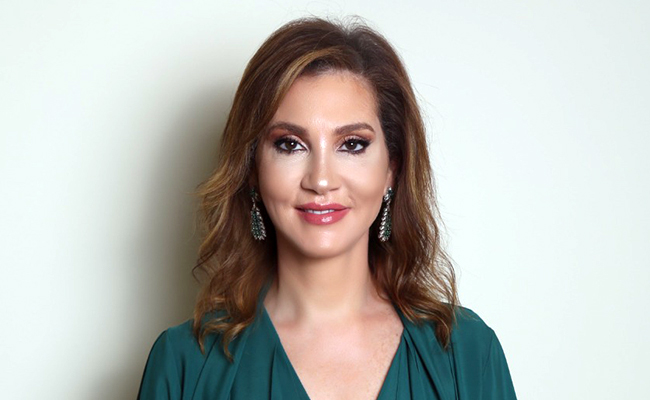
Prof. Dima, it is truly our honor to welcome as one of UniNewsletter’s distinguished leadership figures, particularly on the occasion of beginning your new role as Dean of the Adnan Kassar School of Business (AKSOB) at Lebanese American University (LAU). Could you please begin by familiarizing our readers with your career trajectory thus far?
My professional journey spans over two decades across diverse academic,
leadership and policy settings in Lebanon, the UAE, the UK and the
United States. From my early days in academia, I’ve been driven by a
deep belief in the power of education to uplift individuals and
communities. Whether through my research in corporate social
responsibility and sustainability or in executive roles¾such as serving as Vice President and Dean at Canadian University
Dubai¾my mission has always centered on shaping
purposeful institutions that
empower future generations. Each step along the way has strengthened my
conviction that true academic leadership lies in connecting scholarship
with real-world challenges and opportunities. Today, at the Adnan Kassar
School of Business, I bring this lifelong commitment to impact and
excellence to a context I deeply care about¾Lebanon and the wider region.
As you outlined, you’ve held leadership roles across a range of contexts. Looking back, what do you see as the common thread in your journey, and how does it shape your vision for the future of higher education in the region?
Looking back, the thread that has consistently connected all facets of
my career is the pursuit of meaningful impact through education. Whether
I was shaping policy, mentoring students, conducting research or leading
academic institutions, I’ve always seen knowledge as a catalyst for
transformation. It is not enough to inform¾we
must also inspire. This belief has shaped my vision of higher
education as a platform for inclusive progress. It means creating
learning environments that are diverse, forward-thinking, and deeply
committed to ethical leadership. Across every role I’ve held, I have
worked to instill these values¾not just in
institutional structures, but in people.
Lebanon and the wider region have faced enormous economic and social upheavals in recent years. How do you see the role of universities in contributing to resilience and rebuilding?
In regions like ours, universities carry a profound responsibility that
goes far beyond academics. They are among the few institutions that have
retained public trust and that trust is vital in times of uncertainty.
In Lebanon and across the Arab world, universities are called upon to do
more than educate¾they must actively contribute
to resilience, social cohesion and
recovery. They are places where ideas are born, where the next
generation learns to dream again, and where hope is not just taught, but
practiced. At LAU, and specifically at AKSOB, we aim to use our academic
capital to drive innovation, support youth empowerment and help rebuild
civic trust. In doing so, we reinforce the critical role universities
must play in creating stable, inclusive societies.
LAU is firmly rooted in Lebanon, yet operates in a global academic ecosystem. How do you balance global competitiveness with a commitment to addressing the specific needs of your local and regional context?
In today’s interconnected world, we must resist the temptation to view
global and local responsibilities as mutually exclusive. At AKSOB, we
are proud of our AACSB accreditation and the global recognition it
affords us¾but we also understand that
relevance begins at home. Lebanon presents
a unique context¾rich in talent yet deeply
challenged. Our duty is to equip students to
excel on international platforms while remaining rooted in the realities
of their communities. That means designing programs that speak to
both¾integrating cutting-edge business thinking
with a deep understanding of
regional needs such as economic recovery, youth migration, digital
inclusion and entrepreneurship. Balancing global standards with local
purpose is not just a strategy¾it is a
necessity.
Business schools everywhere are being asked to adapt to rapid technological, economic and social change. In your view, what is the most urgent transformation needed in business education today?
Business education can no longer afford to be reactive. The world is
shifting rapidly¾driven by AI, climate change,
evolving labor markets and social
disruption. Business schools must become laboratories for future
readiness. We must embed agility in everything we do¾from our curricula to our teaching methodologies to the way we engage
with our communities. At AKSOB, we’re working to integrate critical
areas such as artificial intelligence, sustainability metrics, digital
entrepreneurship, and ESG standards not as electives or add-ons but
rather as foundational pillars. The transformation we need is not about
following trends¾it’s more so about
anticipating them and empowering students to lead
with confidence and conscience.
You are widely recognized for your work on corporate social responsibility and sustainability. Why do you believe these values are fundamental to the future of business, and how do you think universities can ensure they are more than just “add-ons” or afterthoughts to their curriculums?
For me, CSR and sustainability are not abstract ideas¾they are deeply practical imperatives. My academic research has long
focused on how businesses can¾and
must¾contribute positively to society and the
environment. These values are
no longer “nice to have”; they are essential to long-term success and
legitimacy. Universities must play a leading role in mainstreaming this
mindset. At AKSOB, we are embedding sustainability and social
responsibility across our programs, research agendas and partnerships.
We want our students to graduate not only as competent professionals,
but as ethical leaders who understand that business must be part of the
solution¾not the problem.
When you think about the next generation of business graduates, what qualities do you believe they must embody to navigate the world they are inheriting?
The world that today’s graduates are stepping into is vastly different
from the one we knew a generation ago. It is more connected, more
volatile, and more demanding of flexibility and purpose. Our students
must embody adaptability¾the ability to pivot
and learn continuously. They must carry
empathy¾capacity to understand diverse
perspectives and lead inclusively. And
they must be driven by purpose¾a clarity of
values that guides their decisions in both stable and
uncertain times. At AKSOB, we strive to nurture these qualities not only
through what we teach, but through how we engage, mentor, and empower
our students every day.
If you were to look ahead a decade, what kind of lasting impact would you like the Adnan Kassar School of Business to have—on its students, its community, and on the region more broadly?
My vision for AKSOB is rooted in impact. I want to build a business
school that doesn’t just prepare students for the marketplace, but for
life¾a school that embodies innovation,
inclusion and regional leadership.
One of my goals is to strengthen the bridge between academia and
industry so that our graduates are not only prepared for the workforce
but equipped to transform it. I hope that a decade from now, AKSOB will
be seen not just as one of the top business schools in the region, but
as a model of what it means to lead with integrity, relevance and
purpose. Ultimately, I want our students to walk out of here not only
with a degree, but with a mission¾to be part of
the change they wish to see.