
Published on Aug 2025
Share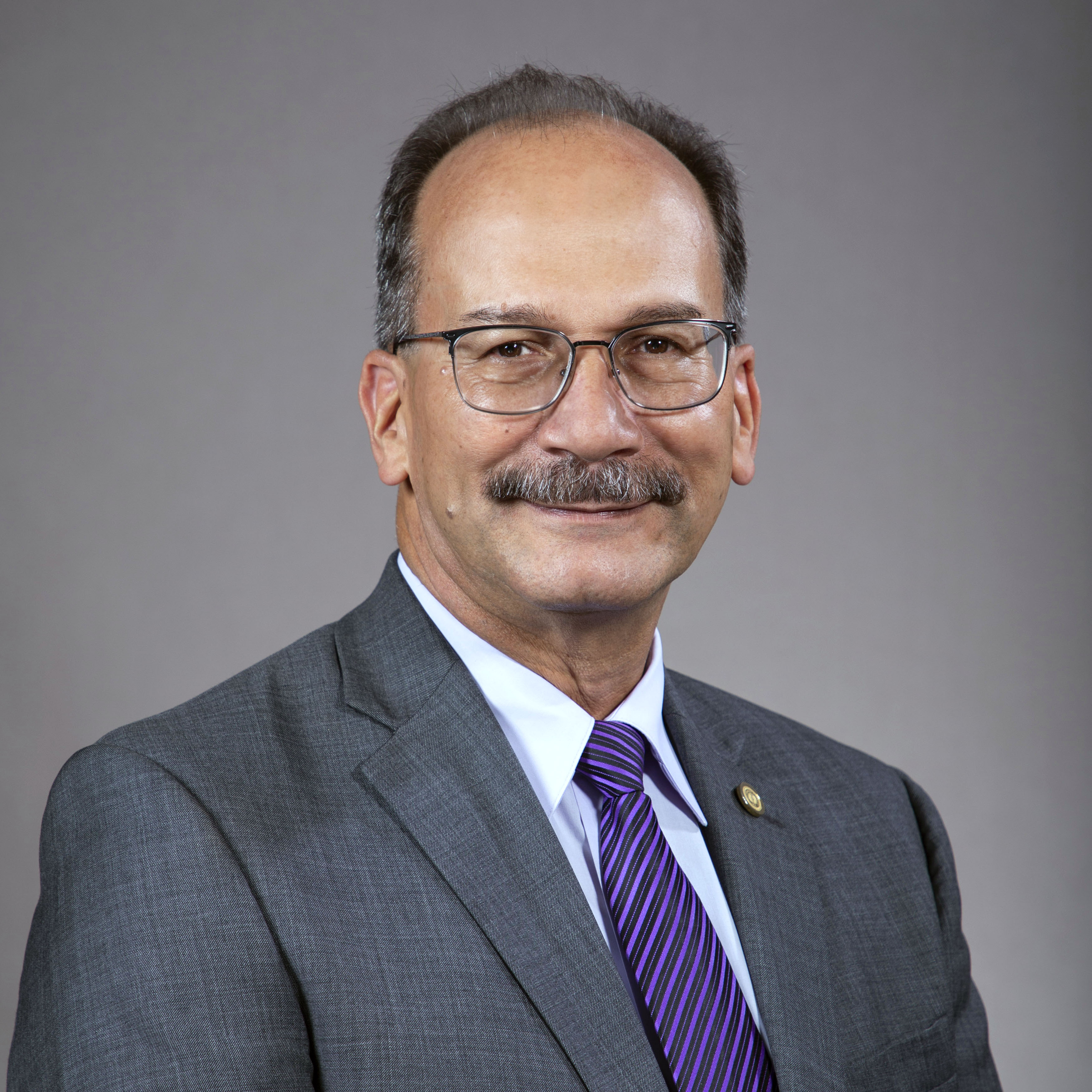
Dr. Rodríguez, please let me begin by stating what an honor it is to feature your insights in this Special Issue of UniNewsletter about the strategic evolution of HEIs. First, as is customary for our Leadership Spotlight interviews, please introduce yourself to our readers and outline your trajectory in higher education thus far.
Thank you for inviting me to speak with UniNewsletter. I have the honor of serving as the 20th President of the University at Albany. UAlbany is a part of the State University of New York (SUNY) System. We are located in New York’s capital city, Albany. Prior to being named UAlbany’s President, I served as founding provost and executive vice president for academic affairs at the University of Texas Rio Grande Valley (UTRGV) and President, ad interim and vice president for academic affairs at the University of Texas-Pan American (UTPA). I also served in various leadership and faculty roles at the University of Delaware and the University of Puerto Rico-Mayagüez.
I spent my childhood living in New York and Puerto Rico, where I was raised by a single mother who emphasized the importance of education. But pursuing a college degree was not a foregone conclusion for me. I first earned a vocational degree as an auto mechanic and later joined the United States Air Force where I served as an Emergency Medical Technician. While stationed in England with the Air Force, I earned a bachelor’s degree and, critically, met a mentor who encouraged me to continue my studies, changing the trajectory of my life. Without his belief in me, I don’t know if I would have ended up on this path. Throughout my academic career, my scholarship has focused on the socioeconomic impact of disasters on vulnerable communities—nationally and globally—as well as poverty and income inequality among Latina/o communities in the United States and Puerto Rico.
First I’d like to ask you about UAlbany’s reintegration of the College of Nanoscale Science and Engineering and its involvement with the National Semiconductor Technology Center. How do these initiatives reflect your broader vision for the evolving role of research universities in the 21st century?
This reunification is a major point of pride for me and a major and transformational accomplishment for the University at Albany— especially because when I arrived at UAlbany, almost everyone told me that having this college return to UAlbany would be politically impossible. The College of Nanoscale Science and Engineering (CNSE) began at UAlbany more than two decades ago and was the first college in the United States dedicated to the study of nanotechnology. Unfortunately, in 2014, it was separated from UAlbany. Beginning in 2017, we worked extremely hard to bring CNSE back to UAlbany. In 2023, our hard work came to fruition, and we brought CNSE back to UAlbany as the now expanded College of Nanotechnology, Science and Engineering (CNSE). This College is not only thriving, but it is an essential element of both UAlbany’s strategic future and of broader U.S. economic policy. In passing the CHIPS & Science Act, which funds the National Semiconductor Technology Center (NSTC) that will be housed at Albany Nano-Tech, U.S. federal officials had clear goals. These are to ensure the U.S. leads in critical areas of semiconductor and microelectronics R&D, which will be essential to applications like AI; significantly onshore the manufacturing capacity to produce the chips necessary for economic and national security; and ensure that we have a diverse and educated workforce to do all of the above. CNSE has an important role to play in all three.
Our faculty researchers are leaders in critical fields like EUV lithography, which will be the focus of the NSTC here in Albany. Our students are learning from the best in their fields in programs tailored to meet industry needs while also gaining unparalleled real-world experience in our academic facilities and with our industry partners. UAlbany has contributed to the thriving open-innovation ecosystem that has lured major chip fabs to Upstate New York. As research institutions are increasingly called on to prove their worth and justify the value of public support, this is exactly the kind of work we should be doing. CNSE’s research is squarely in the U.S.’ economic interest, and we are preparing the next generation of semiconductor engineers and scientists for rewarding and well-paying careers in a high-demand field.
UAlbany’s recognition as the first R1 university in the Northeast to receive the Seal of Excelencia is a significant milestone. What specific institutional strategies and practices have driven this achievement, and how do they inform your long-term approach to inclusive excellence?
UAlbany is proud to be one of the most diverse R1 universities in the U.S. and earning the Seal of Excelencia was such an important validation of the work we have done to support diversity and inclusion on our campus. We are proud to be an institution where diversity is celebrated, where equity guides our work and where inclusion is at the forefront.
When we think about inclusive excellence at UAlbany, we are focused on programs that support all students, meeting them where they are and supplying them with the tools and opportunities they need to succeed. For example, because more than 30 percent of our students are first-generation college students, last year we introduced Great Danes 101—a bilingual online course for parents and families that demystifies college and helps them better support their students.
In our application for the Seal of Excelencia, we highlighted many ongoing initiatives that contribute to the success of our Latino population— and all students. These include pipeline programs that introduce UAlbany to students from diverse backgrounds; opportunity programs that provide students with financial and academic support; and dual-admission agreements with community colleges across New York that smooth the path for students who want to transfer to UAlbany to complete their bachelor’s degree.
With these and other initiatives, our approach is to identify the root issues that get in the way of student success, develop data-driven approaches to address them and then review and refine those approaches based on data. Consequently, not only is UAlbany one of the most diverse research institutions in the country, but we are also recognized among the top institutions nationally as it relates to the economic mobility of our students.
UAlbany recently launched a university- wide initiative on artificial intelligence. How is the institution working to embed AI across academic disciplines and research areas, and what opportunities or challenges have emerged in the process?
Artificial Intelligence (AI) is rapidly revolutionizing our world, from the way we work, to the way we communicate, to the way we conduct research, to the way we educate our students. UAlbany is determined to lead the pack in harnessing the incredible potential of this technology while also ensuring that our students are poised to harness this powerful tool, no matter their chosen discipline.
Those goals were the impetus for our AI Plus initiative, a university-wide endeavor that aims to integrate teaching and learning about AI across our academic and research programs. Since launching the initiative in 2022, we have embarked on the largest cluster hire in university history, bringing in 27 new faculty members with AI expertise across disciplines in every school and college at UAlbany. We also established the AI Plus Institute, which serves as a central hub for our cutting-edge AI research. Further, we installed an advanced AI Supercomputer that is being used by students and faculty researchers in a variety of disciplines.
The 2025 launch of our AI & Society College and AI Society Research Center advances AI Plus even further by creating the scholarly infrastructure to support the development of innovative AI-focused curricula and research collaborations that center AI’s intersection with humanity.
What we have found is that our students and faculty are eager to learn more about AI and incorporate AI into their scholarly and research work. We have also found that business leaders are eager for our graduates to bring some knowledge about AI with them into the workplace.
All of this work has been bolstered through strategic support and leadership from New York State and Governor Kathy Hochul. New York’s Empire AI Consortium is bringing together public and private universities, including UAlbany, with industry and nonprofit leaders with the goal of having New York become a national leader in AI.
With initiatives such as COIL (Collaborative Online International Learning) and microcredentials in international education strategies, UAlbany has been expanding its global learning opportunities. How do these programs enhance the student experience, and how are they helping to prepare graduates for a more interconnected world?
Our mission at UAlbany is to educate engaged global citizens and, as such, internationalization is one of UAlbany’s five strategic priorities. About 10 percent of our student population, or about 1,700 students, are international. They add so much diversity and richness to our campus, bringing their history, culture, language, traditions and cuisine to Albany. And many more of our students have international experiences while at UAlbany through study abroad, fellowships, visiting professors and programs like COIL. We know that when they leave our campus, our graduates will be in an interconnected, global world. We have an obligation to prepare them to succeed in a global society. Consequently, our international partnerships and academic and research collaborations span the globe.
Universities’ engagement with their local economies is an important issue. How do you see UAlbany’s role evolving as both a global institution and a regional anchor in context of, for example, the transformation of the former Albany High School into a center for engineering and nanotechnology?
We are an anchor institution in the city of Albany and across New York’s Capital Region with a $1.1 billion annual economic impact on our surrounding communities. The success of our university and our city are inextricably linked, so I consider it critical that we are engaged with local business leaders and that as we grow and evolve, we do so with the needs of the local community in mind. The former Albany High School is an excellent example. The historic building had been vacant for several years and redeveloping the site was a priority for UAlbany and the city. At the same time, our College of Nanotechnology, Science and Engineering needed an advanced new space to continue growing and attracting top talent.
The project took many years to complete, including several years spent securing state funding, but the ultimate result is a state-of-the-art facility that meets the university’s current and future needs, solves a challenge and creates new opportunities for the city and supports the continued growth of our regional semiconductor industry. The new CNSE building retains the historic character and architecture of the original building and adds innovative teaching and research space, a maker space and room for critical programs to grow. The key to making a project like this successful was nurturing strong partnerships with all the interested parties, including elected officials, industry leaders, the neighborhood association and the faculty and researchers who now work and teach in the building. In my view, serving as a connector between these groups and working to meet the needs of our community are essential roles for public universities.
As higher education institutions navigate increasing financial and demographic pressures, how is UAlbany positioning itself to remain resilient and sustainable? What lessons have been learned from recent developments in the regional higher education landscape?
The University at Albany has been around for more than 180 years, so we have persevered, and thrived, through many social, political and economic changes. As such, resiliency is baked into our DNA. That long history gives us important perspective as we navigate new challenges. One of the keys to navigating today’s ever-evolving environment is developing strong partnerships with industry. To that end, I recently established a President’s Industry and Economic Development Advisory Board to bring the leaders of our region’s major industries—including semiconductor manufacturing, pharmaceutical research, healthcare, computing and artificial intelligence—together in conversation with the university. This group is helping UAlbany identify regional workforce needs that align with our strengths, potential research collaborations and internship and employment opportunities for our students and alumni.
We are also doubling down on our connections with national and international higher education associations and organizations like the Association of Public & Land-Grant Universities (APLU), Campus Compact, the Hispanic Educational Technology Services (HETS), Excelencia in Education, the Pew Charitable Trusts’ Presidents and Chancellors Council on Public Impact Research and the Middle States Commission on Higher Education. While I serve on the Boards of these organizations, they also enable close collaboration with our fellow universities that are navigating similar challenges.
Finally, we are working hard to tell a clear story about the value of public universities like ours to elected officials, policymakers, industry leaders and the general public. We know that UAlbany is a force for good in the world. Through education, we propel students to better futures. In our research labs, we develop advances and solve problems that lead to healthier, safer and more prosperous lives. Through our scholarship, we increase our understanding of the world around us. In everything we do at UAlbany, we are focused on serving the public good. It is imperative that we tell that story loudly and proudly.
To conclude on a particularly pressing topic, you were recently appointed to the White House Advisory Commission on Advancing Educational Equity, Excellence, and Economic Opportunity for Hispanics. How did that role influence your leadership at UAlbany, and in what ways can public universities more effectively contribute to national higher education policy? Particularly as it relates to issues of equity and inclusion.
I was incredibly honored to be named to President Biden’s Advisory Commission on Advancing Educational Equity, Excellence and Economic Opportunity for Hispanics and I am so proud of the work we did as a Commission. I chaired the Commission’s Higher Education committee, which worked to identify opportunities for the federal government to leverage the power of higher education to uplift communities. The recommendations we put forth addressed real challenges and opportunities for Latinos/as pursuing higher education and even led to an Executive Order. I had the rare opportunity to be in the Oval Office of the White House while President Biden signed that Executive Order, which is an honor I will never forget.
With the change of administration, unfortunately, the Commission was disbanded, but the lessons I learned from my service continue to influence my leadership at UAlbany and in my community. One key lesson was the power of developing broad partnerships. The Commission brought together leaders from higher education, K-12 education, business, non-profit and government. Each commissioner’s unique experiences and expertise contributed to the recommendations we put forth and our work was better for it. I also learned a great deal about the inner workings of the U.S. federal government and just how much it takes to turn an idea into a policy, from gathering evidence and making a strong case, to building buy-in and support from across the federal government.
Since serving on the Commission, I have been more closely attuned to the power of partnerships and to the opportunities I have as a university leader to be an advocate for policies that will benefit the communities I serve.