
Published on Mar 2026
Share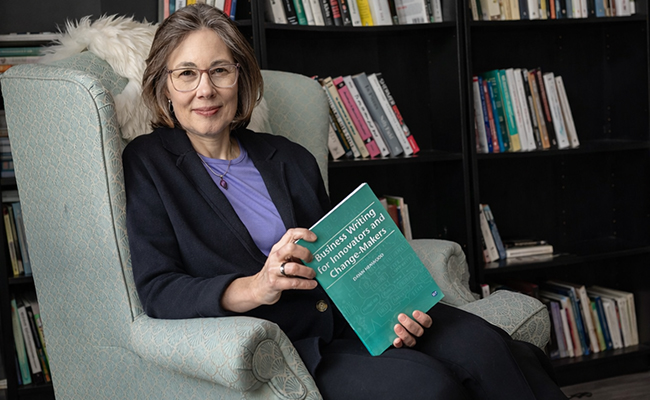
In Canada, where nearly all universities are publicly funded, researchers are facing growing pressure to show government funders and taxpayers the value of their work in practical terms. Most federal and provincial grant programs now require research proposals to include a plan for “knowledge mobilization.” Increasingly, it’s no longer enough for a project to have scholarly merit; it must also demonstrate potential to produce tangible outcomes with economic, social or environmental benefits.
Despite the incentives built into funding programs, knowledge mobilization remains more a slogan than a widespread practice. It’s time to reconsider what it takes to move research knowledge from peer review into “real life” and the kind of talent needed to do this. To transform science into impact, we must look beyond merely scientific expertise and scientifically trained professionals.
The knowledge mobilization talent gap
To facilitate knowledge mobilization, many universities have hired a new class of administrators—professional knowledge mobilizers. Their job is to communicate research to the world beyond the Ivory Tower and to promote uptake.
In theory, having a designated knowledge mobilizer should enable research teams to make rapid progress on their impact goals. In reality, however, knowledge mobilization requires a diverse skill set which lies beyond the reach of many mobilizers.
In a landmark article, British and Canadian researchers identified 11 different categories of “impact competencies” required for knowledge mobilization. These mainly comprise non-scientific skill sets, such as change management, communication, facilitation, negotiation, leadership, project management, stakeholder engagement and management and capacity building.
This list is so long that it’s hard to imagine one person embodying all the competencies. Yet budget constraints mean that many research organizations can afford just a single knowledge mobilization hire. Because scientists tend to hire other scientists, often recent graduates from master’s or doctoral programsmany so-called professional knowledge mobilizerslack the full suite of skills needed to fulfill their professional duties.
Why we need more T’s than I’s
Search for “knowledge mobilization” roles on LinkedIn, and you’ll notice a trend in the job descriptions. Most research organizations are looking to hire I-shaped employees, professionals with a skill set based on deep, or vertical, knowledge of a field. For example, a research institute devoted to marine biology will likely advertise for a marine biologist and turn away applicants with a background in biochemistry.
This emphasis on disciplinary knowledge overlooks the need for employees with more wide-ranging skillsets—people who are T-shaped rather than I-shaped. These are individuals who have adequate vertical knowledge combined with a set of adaptable, horizontal skills. The top bar of their T profile enables them to navigate various domains and situations.
Contrary to what job ads would suggest, knowledge mobilization involves much more than simply translating research into Plain Language summaries or sharing data through social media posts. While basic science communication activities may help raise awareness about a research topic, they won’t result in decision-makers using research to shape policy or create innovative products.
Genuine knowledge mobilization happens through intentional, often intensive, relationship-building activities. These include, for example, community events, partnerships with community groups and meetings (lots of meetings) with policymakers and other decision-makers.
Whereas someone who’s trained as a scientist might function capably in a narrow, science communication role—so long as they stick within their scientific specialty—they tend to lack the human skills that make the difference between an I and a T. Their academic background gives them a precise vocabulary and an in-depth understanding of methodologies. Yet it leaves them with an imprecise understanding of what makes people tick, how to navigate delicate social situations and how to access and influence individuals enmeshed in complex systems.
True, many professional knowledge mobilizers with a scientific background gain social acumen through experience. If we want to accelerate the flow of research from academia into practice, however, then why not hire staff who come already prepared with mission-critical competencies?
Help from the humanities
In knowledge mobilization, as in every other field, AI is being heralded as the answer to many inefficiencies. Certainly, emerging technologies can help with many aspects of knowledge mobilization. They can speed up some aspects of background research, low-level and routine writing, graphic design, video editing and administrative processes.
What AI won’t do is solve the talent gap created by hiring I-shaped professionals to lead knowledge mobilization efforts. To truly mobilize knowledge, we need more than the latest tools. We need people with the ability to mobilize people.
Although scholars have produced dozens of theories, models and frameworks to explain how knowledge mobilization could or should work, no neat diagram can capture the messiness of the process as it actually unfolds. The moment people enter the picture, straight lines start to wobble and clear-cut pathways get murky.
These are the very conditions in which humanities graduates excel, represented aptly in the famous words of Lewis Carroll’s poem, “Jabberwocky”:
’Twas brillig, and the slithy toves
Did gyre and gimble in the wabe:
All mimsy were the borogoves,
And the mome raths outgrabe.
Viewed through a scientific lens, such words (if we can call them such) are nonsense. To a mind trained in appreciating and navigating artistic ambiguity, on the other hand, they make perfect sense. They convey, through unconventional modes of linguistic representation, the experience of entering a mysterious, threatening world. Just because the language can’t be decoded, syllable by syllable, doesn’t mean we can’t access it or interpret it.
Much of the knowledge mobilization process, which varies from one murky situation to the next, is like forging a path through the “brillig, and the slithy toves.” To lead the charge, we need knowledge mobilizers who can operate without a GPS, professionals who can draw on other ways and means of sense-making.
I’m not talking about old-fashioned tools, like sextants, but rather about the finely tuned skills developed through studying humanities disciplines, such as English, philosophy, music, art history, modern languages, classics and political science. Academic training in these fields hones research literacy as well as abilities related to social perceptiveness, interpersonal communication, storytelling, persuasion, problem-solving, critical thinking, creative thinking, strategic thinking, reflection and meta-cognition (the ability to think critically about one’s own thought processes).
To find this T-shaped talent, research organizations don’t have to look for a unicorn, the rare scientist who brings both deep technical knowledge and sophisticated human skills. They just have to turn toward humanities disciplines, which have a long history of cultivating T-bar skills, including the ability to decipher complex ideas across different subject areas.
As a former scholar of nineteenth-century literature, I’ve parlayed my humanities skills into providing communication consulting to researchers across a wide array of disciplines, from AI to veterinary sciences. If we want to get serious about accelerating knowledge mobilization, then we must create more opportunities for other humanists to contribute to the cause.
In Canada and elsewhere, knowledge mobilization is no longer a nice-to-have but a must-do. As the world’s problems become more complex and more dire, researchers are being called upon to step up with innovative advice and solutions. To make this happen, we can’t rely just on scientists or AI-enabled tools to mobilize research. We need T-shaped talent that can lead multidimensional, relational work—and humanities grads are uniquely equipped to step into that role.