
Published on Apr 2026
Share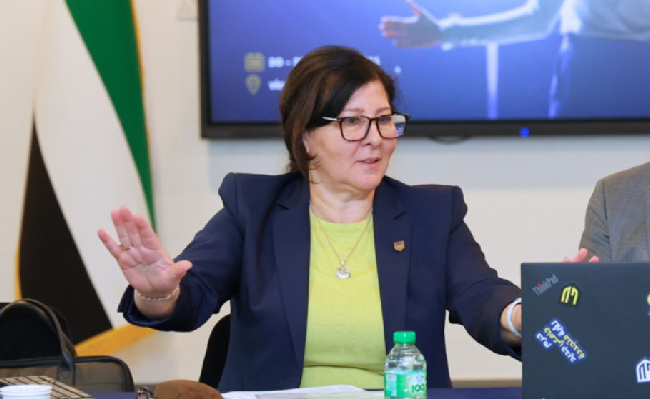
Dr. Faiza Zitouni, PFHEA, Dean of Student Affairs, Liwa University, United Arab Emirates (UAE)
Higher education institutions across the world are undergoing a critical period of transformation shaped by rapid innovative technological advancements, evolving societal expectations with varied demands, dynamic economic conditions and high competition. In this context, effective leadership becomes paramount in navigating Higher Education Institutions (HEIs) through these complex shifts, ensuring their continued relevance, resilience and strategic agility.
This article examines the multifaceted challenges and emergent opportunities associated with the transformation of HEIs, emphasizing the vital role of advancing women’s leadership as an important dimension of institutional capacity building. Additionally, it highlights how specialized initiatives such as the “She Leads” program can foster leadership development, enabling institutional change with successful outcomes.
Navigating Challenges and Opportunities in Higher Education Transformation
The landscape of higher education is continually reshaped by dynamic internal and external pressures. Universities are confronted with the rapid pace of digital innovation, particularly the integration of artificial intelligence (AI), and the widespread expansion of online, blended and hybrid learning environments, as described by Dr. David Nickel, member of the Board of Directors of the American Association of University Administrators. At the same time, increasing pressures on financial viability continue to prompt alternative and innovative funding models and strategic approaches for financial sustainability. Furthermore, evolving students’ expectations, alongside growing concerns for their mental health and wellbeing, in addition to legislative and compliance pressures, add further layers of complexity.
Despite these challenges, the current transformation also presents significant opportunities for growth and innovation. The adoption of digital tools can lead to innovative reimagining of pedagogical models that enhance the overall quality of the learning experience and accessibility. Strategic partnerships with industry and global entities can foster research, talent development and knowledge exchange. Moreover, data-driven decision making supported by AI and advanced analytics can improve student success strategies and streamline institutional processes. Importantly, this period of transformation provides a critical opening to foster more inclusive, equitable and diverse institutional cultures, enabling a broader range of perspectives and experiences to inform and drive sustainable progress.
The Indispensable Role of Women’s Leadership in Higher Education Transformation
The growing emphasis on leadership diversity within higher education represents not only an ethical obligation but also a strategic necessity for successful institutional transformation. Women leaders often bring distinct approaches and perspectives that are particularly well suited to navigating complex organizational change and to fostering strategic leadership. Research indicates that women leaders frequently adopt a more participative, collaborative and human-centered leadership style. These qualities are increasingly recognized as essential to fostering engagement, cooperation, strengthening collective decision making and supporting long-term, sustainable institutional change in contemporary higher education. Moreover, the presence of women in leadership roles has an impact on institutional culture, policy development and equity initiatives. Studies demonstrate that women leaders are instrumental in developing and implementing inclusive educational policies that benefit a broader spectrum of students and faculty.
In addition, international research across the board has shown that institutions with greater representation of women in senior positions, such as female Presidents, Provosts and Deans, tend to exhibit better representation and provide equity for women throughout the leadership pipeline and reduce gender-based disparities, hence contributing to stronger institutional culture with imposed representation across academic structure. Furthermore, women leaders, who are more likely to prioritize human connection and emotional intelligence, contribute to supportive and adaptable organizational environments, which are important during periods of significant institutional transformation.
“She Leads”: Advancing Women Leadership in Higher Education
Developed by Advance HE and modeled after its highly successful Aurora program, the She Leads program is designed to cultivate women in leadership roles. It is an important component for individual empowerment and institutional development within the higher education sector. Having supported over 15,000 women across more than 200 institutions in the UK and Ireland, Aurora has been recognized for its exceptional training. The She Leads program has also been implemented into specific regional contexts, such as the GCC region, and more recently launched in the United Arab Emirates, supported by its alignment with UAE Vision 2071 and the national strategy for advancing women’s empowerment. The inaugural She Leads program in the UAE was launched at Liwa University and delivered by Advance HE in January 2026.
The She Leads program is methodically designed to address the unique challenges and opportunities faced by women in higher education leadership. It focuses on strengthening leadership capabilities by providing women participants with essential and advanced skills for effective governance and strategic decision making. It also promotes diversity and inclusion by fostering an understanding of inclusive practices, organizational cultures and their role in institutional success. The program equips women leaders for organizational change by offering practical tools and frameworks for the support and implementation of transformative initiatives. It also facilitates mentorship and professional networks by connecting emerging leaders with experienced practitioners to strengthen guidance, support, long-term career progression and building robust professional networks. Furthermore, the program adapts to unique cultural contexts by ensuring its content reflects and aligns with the institutional realities of diverse regions. This was demonstrated in the launch program for Emirati higher education delivered at Liwa University.
The impact of She Leads is evident in enhancing women’s confidence and increasing promotion rates, as reported by its participants. It functions as more than just a training program. Rather, it is a platform for transformation that empowers women to lead confidently and inclusively with purpose, thereby embedding women’s empowerment into the very culture of HEI’s fabric. By developing a pipeline of capable women leaders, She Leads directly contributes to the resilience and innovative capacity required for successful higher education transformation.
In conclusion, the transformation of higher education represents continued and multifaceted efforts shaped by ongoing challenges as well as emerging opportunities. Through this evolving landscape, successful institutions require leadership that is flexible, collaborative and firmly grounded in inclusive principles. Within this context, strengthening women’s leadership through initiatives such as the She Leads program is not simply an additional enhancement, but rather an important initiative that supports sustainable
transformational change. By broadening leadership perspectives and equipping women to take active roles in shaping institutional futures, higher education systems are better positioned to respond to contemporary pressures, leverage new possibilities and advance toward a more equitable, innovative and robust sector.