
Published on Mar 2026
Share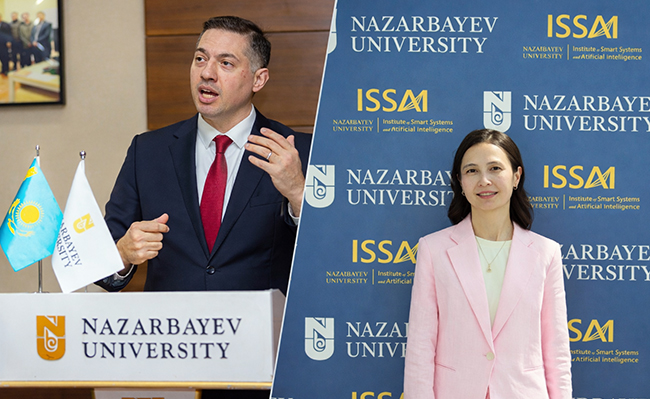
Since the days of the Dartmouth workshop in 1956, universities have played a central role in shaping artificial intelligence (AI). They laid much of the theoretical groundwork and trained the researchers and engineers who now lead the field. But the balance has changed. Today, most breakthroughs in generative AI come from industry labs with access to massive datasets, large-scale compute and direct deployment channels. From Transformers first introduced by Google Research, to large language models scaled by OpenAI, and more recent mixture-of-experts architectures used by DeepSeek, the frontier is largely industrial, as reflected in the 2025 AI Index report of Stanford University.
This shift forces universities to rethink their role. The key question is no longer whether universities can build the largest or most powerful models. Instead, it is whether they can shape how AI is used once it becomes part of everyday life. As generative AI increasingly influences language, education and public services, universities may have their greatest impact not through scale, but through governance, local adaptation and a focus on public benefit, especially in areas where commercial platforms fall short.
Our experience at the Institute of Smart Systems and Artificial Intelligence (ISSAI) at Nazarbayev University in Kazakhstan shows how this can work in practice. Universities can move beyond papers and prototypes to build AI systems that serve society directly. This is particularly important in contexts where global platforms struggle to support local languages, reflect cultural nuance or align with national priorities.
Why public-impact AI is a university responsibility
Generative AI is rapidly shaping how people communicate, access information and interact with public institutions. Yet most leading models are developed by private companies and trained primarily on a small set of high-resource languages. For societies with underrepresented languages, this creates a growing gap between what technology offers and what is culturally meaningful or socially useful.
Universities are uniquely positioned to address this gap. They combine research independence, public trust and deep expertise across technology, linguistics and the social sciences. Their long-term perspective allows them to prioritize inclusion, transparency and national relevance over short-term commercial returns.
Digital sovereignty also matters. When AI systems are fully external, societies have little visibility into how they are trained, updated or governed. This is especially problematic for education, language policy and public administration. Universities can help by building and stewarding AI systems that are locally grounded, openly examined and aligned with national priorities, while still remaining connected to global research communities.
To achieve real impact, generative AI for the public good cannot remain a collection of short-term projects or demonstrations. It must be treated as shared digital infrastructure, designed to work with schools, public institutions and everyday users, and capable of evolving as social needs change.
From a gap to an ecosystem
Our work did not begin with the ambition to build a national language model. It started with a practical problem. Global models performed poorly in Kazakh, struggled with its complex morphology, and often produced culturally inappropriate outputs. These shortcomings affected access to information and limited the usefulness of AI in education, media and government.
Relying solely on external AI systems also raised concerns about transparency, resilience and long-term control. In sensitive domains such as education and public administration, not understanding how models are trained or updated introduces structural risks. From a university perspective, this gap was both a research challenge and a societal responsibility. Addressing it required moving beyond evaluation papers toward building a generative AI ecosystem tailored to local needs.
One important lesson is that public-impact AI is not a single model. It is an ecosystem. The release of KazLLM, Kazakhstan’s first large language model trained on curated multilingual data, was a key milestone. Its significance lay not only in the model itself, but in what it enabled afterward.
KazLLM has been recognized by leading AI researchers, including Yann LeCun, as an example of how language-specific and lower-resource models can be developed responsibly outside dominant global platforms. In this sense, it illustrates what sovereign generative AI can look like: Systems that preserve linguistic diversity while remaining aligned with international research standards.
Crucially, KazLLM was treated as foundational infrastructure rather than a one-off research output. The ISSAI Playground was created to give students, educators and researchers direct access to the model and related tools. Users can experiment, learn and evaluate AI systems without deep technical expertise or reliance on external platforms. This approach allows real use cases to emerge organically and informs continuous improvement.
Infrastructure is equally important. Building and sustaining generative AI requires hands-on experience with modern hardware, including GPUs and accelerators from NVIDIA, AMD and Huawei. Knowing how to train models efficiently, manage compute resources and deploy systems reliably is as important as algorithmic innovation or data ingenuity. Without this operational knowledge, even well-designed models risk remaining isolated research artifacts.
This ecosystem approach also transforms talent development. Students and early-career researchers gain experience across the full AI lifecycle, from data curation and training to deployment and governance. They learn to navigate real-world trade-offs between cost, performance and scalability, helping build a domestic workforce capable of sustaining public-interest AI systems over time.
Openness as a strategy
It is often assumed that sovereign AI must be closed for strategic reasons. Our experience suggests the opposite. Openness, when combined with clear governance and responsible-use policies, strengthens public impact.
By releasing models, benchmarks and documentation for non-commercial research, ISSAI enables scrutiny, collaboration and independent evaluation. This transparency builds trust among policymakers, educators and users, while also connecting local initiatives to the global research community.
A concrete example is Qolda, ISSAI’s fully open-source multilingual language and vision model. With 4 billion parameters, Qolda can run on laptops and smartphones without requiring large-scale compute. It supports Kazakh, Russian and English, and offers multimodal reasoning in a compact and efficient form. By lowering hardware and access barriers, Qolda extends AI capabilities to students, researchers, developers and small businesses.
Openness reflects a core academic principle: knowledge as a public good. Generative AI systems should be examinable, adaptable and open to debate. Rather than shaping society through opaque tools, universities can offer AI that invites accountability and public discussion.
Universities as conveners
Universities also play a critical convening role. Unlike companies or government agencies, they have the credibility and independence to bring together data scientists, linguists, engineers, policymakers, educators and industry partners around shared AI infrastructure.
At ISSAI, partnerships with ministries, language institutions and other universities were essential for data access, evaluation and deployment. These collaborations were iterative and trust-based, reflecting long-term commitment rather than short-term commercial interests.
This role is especially important in generative AI, where technical choices have linguistic, cultural and ethical consequences. Universities provide the institutional space and governance frameworks needed to navigate these trade-offs thoughtfully.
Nazarbayev University, as Kazakhstan’s leading research institution, attracts some of the country’s strongest talent. In a local ecosystem with few large technology companies capable of frontier AI research, universities are well positioned to lead agile, high-impact projects. They can mobilize talent quickly and focus on work that is socially and nationally relevant, turning AI research into a public resource.
Implications beyond Kazakhstan
The lessons from Kazakhstan are broadly applicable. Many regions face similar challenges: underrepresented languages, dependence on external AI platforms and growing pressure to integrate AI into education and public life. Universities are uniquely suited to address these issues, but only if they move from abstract ambition to practical impact.
Several principles stand out:
Generative AI already shapes how people communicate, learn and access information. The question is no longer whether it will influence society, but who will guide that influence and for whose benefit. By stepping beyond the lab while maintaining rigorous research standards, universities can help ensure that AI reflects linguistic diversity, cultural nuance and societal priorities, aligning technological innovation with the public good.