
Published on Apr 2026
Share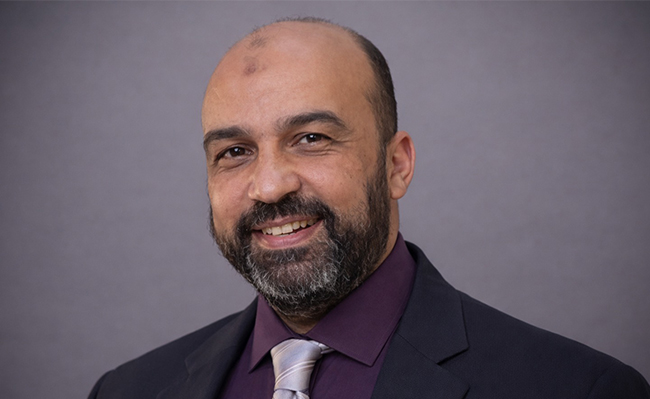
Professor Mohammed Ahmed Hassanien, SFHEA Advisor to the Vice President for Educational Affairs Professor of Clinical Biochemistry King Abdulaziz University, Saudi Arabia
There is a moment most educators can identify—the one where you stop observing a technology and start trusting it. For me, it arrived somewhere between completing a Data Science and Machine Learning certificate at MIT and realizing I had just rebuilt the way I thought about teaching. Not dramatically—but substantively nonetheless—in the form of a question I had never quite asked before: what if the tools available to my students could know them better than a single instructor ever could?
UNESCO’s 2023 guidance on generative AI in education frames this moment as one requiring both urgency and care. That combination, in my experience, describes exactly what responsible AI adoption in higher education demands.
From Curiosity to Commitment
My entry into AI was not a calculated career pivot. I had spent more than 25 years in medical education and clinical biochemistry. But the pace of change after 2022—the sudden democratization of large language models, the proliferation of generative AI tools across academic settings—made observation feel insufficient.
The MIT certificate shifted my frame of reference. I began to see assessment not as a snapshot but as a data stream, and curriculum not as a fixed architecture but as a living system. Most importantly, I came to see the educator’s role not as threatened by AI but as expanded by it—provided we do the hard work of understanding what these tools actually do, and what they cannot.
Early experiments with generic AI in my courses were, at best, inconsistent. The models did not know my students’ context. They could not align outputs to accreditation standards. They were powerful, yes, but generic was not good enough.
From Workshops to Systemic Change
Between 2023 and early 2026, I delivered more than 50 workshops and webinars on AI in higher education—across Saudi Arabia, Egypt, Malaysia, the UAE and internationally online. Topics ranged from introductory ChatGPT sessions to advanced prompt engineering, ethical AI use and customized tool development. Beyond the workshops, I have been building a parallel resource on YouTube—now over 27 tutorial videos covering AI tools, prompt engineering, customized GPT development, and practical applications for educators. The channel is open to anyone who wants to learn at their own pace.
What I learned from those rooms was not primarily technical. It was human. Faculty resistance to AI is rarely about the technology itself—it is about trust and professional identity. That fear deserves acknowledgment, not dismissal.
The workshops that worked best reframed AI not as a replacement for educator judgment but as a reduction in friction. When a faculty member discovered she could build a complete exam blueprint in under 30 minutes—a task that previously consumed most of an afternoon—she did not feel threatened. Instead, she felt liberated to spend that time on what no algorithm can replicate: mentorship, the kind of feedback that requires knowing a student’s history.
Efficiency, properly understood, is not about doing less. It is about doing what matters more.
The Case for Customization
The difference between generic and customized AI is decisive. Most educators skeptical of AI have encountered the generic version—plausible outputs, thin on context. Ask it to align exam questions to Bloom’s taxonomy, map them to specific learning outcomes, and format them to an accreditation standard, and it struggles.
The solution my colleagues and I developed was a six-step approach for building customized GPT models , published in 2025. The framework spans needs identification, data collection, prompt crafting, piloting, full implementation and evaluation. Using it, we built 15 purpose-built GPT tools covering curriculum design, assessment, student support, research and quality assurance—each trained on the specific guidelines and learning frameworks of our institutional context.
The six-step GPT development framework, 15 customized tools, key challenges and vision for AI-augmented higher education
EduAI Agent: Building Something Bigger
The project I am most proud of is EduAI Agent —and it did not come from a tech company or a software team. It came from a conversation between colleagues. A colleague and I, both with deep backgrounds in medical education, quality assurance and accreditation, found ourselves asking the same question from different angles: why did no platform exist that actually understood how assessment and curriculum quality work in practice? We had the domain knowledge. We had, by that point, enough experience with AI to know what it could and could not do. So, we built it ourselves—integrating everything we had learned across those three fields into something that did not require you to translate your professional judgment into software logic but met you where you already were.
I will say plainly what it is not: a chatbot. It is closer to what I call an institutional intelligence layer. A system that helps you build learning outcomes, generate exam blueprints, run item analysis, map curriculum to accreditation requirements and produce quality documentation—all in one place, with a coherent audit trail.
What makes it educationally meaningful is the theory underneath it: constructivist principles, designed to scaffold judgment rather than replace it. The system surfaces information and flags gaps. The human makes the decisions.
A tool solves one problem. An ecosystem holds the connections between them—the institutional memory that currently lives, precariously, in spreadsheets, email chains and the expertise of colleagues who will one day retire.
Navigating the Challenges
None of this comes without friction.
Academic integrity is the most visible challenge. When students can generate plausible content in seconds, the traditional essay loses its evidentiary value. The response must be redesign, not just detection—assessments that require genuine reasoning and contextualized application are far more resistant to AI substitution. That is an opportunity, if educators are willing to take it.
Faculty resistance is real and legitimate; it yields to demonstrated value, not persuasion campaigns. Policy gaps are structural, and universities need living governance frameworks that distinguish between AI use that enhances learning and AI use that substitutes for it. And ethical AI deployment, in a sector where the downstream consequences of poor learning are borne by graduates and society, is not a compliance checkbox. It is the foundation.
The Next Phase
The universities that will serve their students best will not be those that adopted AI earliest, but those that adopted it most thoughtfully. Asking hard questions about purpose, investing in faculty capacity and holding fast to the conviction that human relationships remain the irreducible core of education.
AI does not replace the educator who stays after class, or the mentor who sees potential a student cannot yet see in themselves. What it can do—what it is already doing—is free educators to do those things more, and better.
That is the transformation worth building toward.
AI Disclosure
The author used Claude AI (Anthropic) as a writing assistant in the preparation of this article. Claude's assistance was limited to improving readability, grammar, and editorial flow. All ideas, experiences, professional judgments, research findings, and substantive content are entirely the author’s own.