
Published on Jun 2026
Share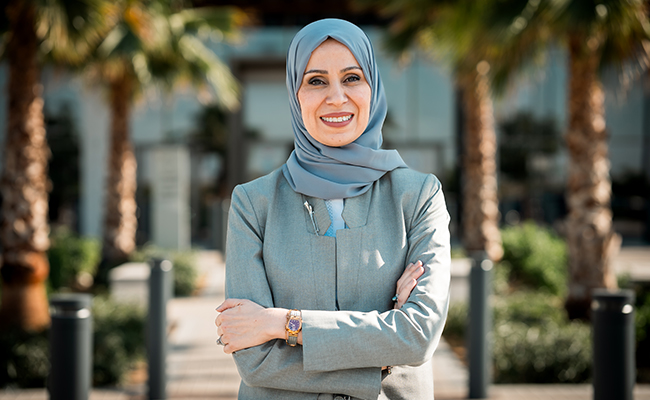
Professor Yusra Mouzughi, Provost, University of Birmingham Dubai, United Arab Emirates (UAE)
Professor Mouzughi, thank you so much for agreeing to speak with UniNewsletter today and joining our cohort of esteemed leadership interviewees. Could you please begin by sharing your academic journey thus far, specifically outlining the key experiences that led up to your current role as Provost at the University of Birmingham Dubai (UOBD)?
I started my career in the finance industry where I worked in insurance in the UK. I ended up in academia almost by accident after I started my PhD in Knowledge Management and was offered an opportunity to do some teaching as an adjunct lecturer. That was the start of a genuine passion for education and making a difference. I worked in UK higher education institutions (HEIs) for over 16 years across the broad spectrum of teaching with some leadership roles, working my way up the career ladder. I then moved to the Gulf to take up senior leadership roles such as Vice Chancellor and President of institutions in Oman and Bahrain respectively. These experiences, individually and collectively, shaped my path to my current role as the first female Provost of the University of Birmingham-a position I am extremely proud of.
As you outlined, you've led institutions situated in very different educational and cultural contexts. How has your approach to leadership adapted across these contexts, and equally, what key qualities have endured in spite of place?
Fundamentally, I believe my experiences in industry have given me a strong and comprehensive perspective that I continue to draw on despite the differences between educational and industry settings. Further, exposure to varying models of HEIs including public, private, niche and broad has meant that I have developed a thorough understanding of the variables that impact success in a university setting. Working in small, boutique institutions as well as large complex ones has meant that my leadership style has had to evolve to reflect the requirements of each context. This is at times a natural response to a situation and at other times a strategic, well-thought-out intentional effort.Two things have endured throughout the years though, and these are a focus on quality and a focus on people. Education is a long-term game and protecting the quality of the educational delivery is paramount. People are the engines behind the institution. When people feel heard, protected and appreciated, they are most likely to come on the journey with you to achieve organizational success. Therefore, quality and people remain constants irrespective of context or institution.
Relatedly, with your deep understanding of both Western and Arab educational systems, how do you believe universities can better bridge cultural perspectives to deliver more globally relevant and inclusive learning experiences?
Every institution talks about cultural diversity but very few actually achieve this. True cultural diversity is best manifested when institutions embed broad perspectives in everything they do, when policies reflect the diversity of the people, when procedures protect all stakeholders and when diversity is embedded rather than layered on top. This is not easy, but it does not mean we should not try to do it. Given the global world we operate in, we owe it to our learners to facilitate this. Great strides have already been taken by many institutions to provide platforms for cultural exchange through staff and student mobility programs. Staff recruitment that genuinely promotes diversity has also been embraced. The next challenge for universities is to ensure equity of opportunity that allows all staff to be supported to grow with the institution. Research is another excellent vehicle for greater cultural understanding and more inclusive learning experiences. Research teams that incorporate broad backgrounds are more likely to bring forward research innovations that reflect the diverse communities we operate in.
How much of your academic training in Knowledge Management continues to inform the way you run an institution day to day? And what lessons from your training are useful for universities in ensuring their programs remain relevant to the evolving needs of the workplace?
I chose my PhD in Knowledge Management specifically because of the timeless nature of the discipline. Knowledge management is something we will always need to consider regardless of what industry we are in. In that sense, I am still very much influenced by my academic training and the need to always consider how we are collecting, leveraging and, particularly, sharing knowledge. While universities are arguably the custodians of knowledge creation, they are not always very good at sharing knowledge both within the institution and more critically outside of the institution. This is partly because in a large and complex university setting, it is easy for knowledge to get 'lost.' This, however, underscores the need for robust systems that allow knowledge to be captured and shared. Internally, the financial benefits of effective knowledge management, if nothing else, easily make the case for knowledge management adoption. Externally, managing knowledge can help facilitate the development of programs that are market relevant.
While the training and value of knowledge management influences how I approach many aspects of my role, sadly, the administrative demands on my time mean that I am no longer active in research in the field-something I would like to come back to later on in life.
Given your extensive involvement with international bodies such as quality assurance and accreditation frameworks, how do you see the relationship between governance on the one hand and innovation on the other?
The governance of education is an important indicator of the strength of any higher education sector. Good, robust governance that allows enough flexibility for institutions to innovate and respond to changing times-while protecting learner rights-is critical to the growth of the sector and contributions to the economy through rounded graduates who can provide the next generation of effective employees, entrepreneurs and researchers. At times, tensions between governance and innovation arise possibly due to governance mechanisms needing to keep the pace with industry developments and industry requirements failing to understand the need to ensure full governance. This can only be overcome by joined up conversations that allow all stakeholders to contribute to arriving at an agreeable set of parameters for growth. In the UAE for example, the model adopted has been one of partnering with universities as key players in delivering the country's ambition for economic development.
Shifting to your current role as Provost, what is your vision for strengthening your institution's academic offering and uniquely positioning it within the regional and global higher education landscape?
As a 100% owned international branch campus of the University of Birmingham, we are privileged to be able to offer a broad range of high-quality programs from a Global Top 100 University right in the heart of Dubai International Academic City. All our programs are of the quality you would expect from a university like Birmingham. Critically, they have been developed to reflect the needs of the local and regional community to ensure relevance and fit.
Working with the team, we have recently completed the development of our UOBD 2030 Strategy. This strategy articulates the next steps in our growth trajectory, identifying our areas of priority, our contributions to our community and our alignment with the University of Birmingham aspirations to be in the Global Top 50 universities by 2030. Our strategy is ambitious, charting clear targets in education, research and knowledge transfer. The strategy is underpinned by a commitment to people and culture as a driving force behind our success. Our portfolio of programs-undergraduate, postgraduate, PhD and Executive Education-have all been carefully curated to ensure a consistently global outlook for all learners. Our impressive graduate outcomes results are a great indicator of the programs' success.
The UOBD campus is an interesting example of how international branch campuses can operate successfully. Can you tell us a bit more about that and what have been the key lessons learned so far?
The University of Birmingham made a brave move in 2018 and opened the first international branch campus of a UK Russell Group university in Dubai. In those 8 years, our programs have gone from 9 to 72; our student numbers have gone from 100 to over 2800; we have an extensive range of research and industry collaborations; and we have moved into our beautiful state-of-the-art campus. Of course, it has not been plain sailing along the way. The pandemic and, more recently, the regional conflict have tested our resilience; but like the UAE, we have always come out stronger.
While there have been many, many lessons learned, fundamentally our success has been due to a small number of factors. These are strong governance from the outset, careful and considered choice of location and partners, focus on long-term mission rather than short-term gain and never compromising on quality. These factors have led to our success to date and will continue to carry us through to our next stage of ambitious growth.
Last, what advice would you give to emerging leaders in international higher education in terms of the skills they will need to lead a higher education of the future?
The higher education sector I joined almost 25 years ago looks nothing like the higher education sector I am operating in now. With the advent of advance technologies, I am sure that the pace of change will be even faster and more acute. Despite all the changes though, the fundamentals of why we joined education remain unchanged. Education is about helping learners ask questions, find answers and make sense of the world. This has not changed. How we go about doing that may look different, but at the heart of it, our role is to support learners get the best educational experience. Therefore, my advice to emerging leaders in the sector would have to be that while it is critical to keep up to date with advances in technology, it is equally important to keep remembering why we are in education and that is to be there for students.