
Published on Apr 2026
Share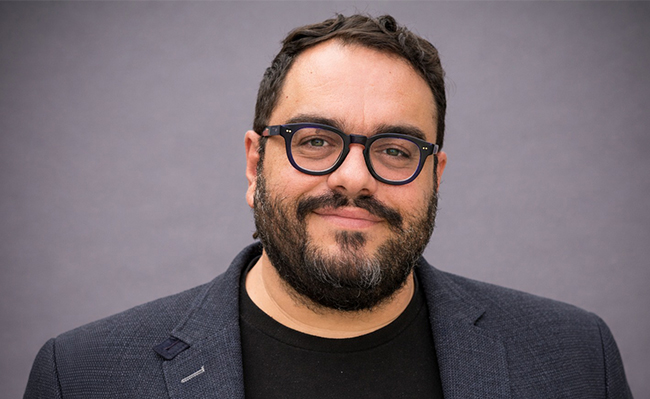
Michael Pazinas , SFHEA Acting Director Center for Educational Innovation Zayed University, UAE
The language of urgency around transformation in higher education has accelerated alongside the rapid development of AI. Its recent shapeshifting, agentic nature is not only molding the working world but also impacting policy and content creation, with far-reaching implications for a spectrum of stakeholders. Examples include claims of its amplification of work to the restructuring of the creative industry. And it is in this dynamic world that universities are tasked with preparing graduates to drive economic competitiveness and navigate aggressive labor markets.
In February, at the recent World Governments Summit in Dubai, a PricewaterhouseCoopers (PwC) report was released calling on universities to co-design programs that align learning with real jobs. Institutions were told they need closer industry partnerships and a system of stackable, digitally verifiable micro-credentials that can be slotted together like jigsaw puzzle pieces to build new degrees that meet market demands. They were told to quickly update curricula to reflect the impact of AI, and while degrees remain important, they must embed portable, work-aligned skills.
On the surface, this approach makes perfect sense. Who is going to argue that mobility is not important? AI short courses and nanodegrees need to connect learning to earning. The rhetoric is simple: we need a credentialing system that makes the transition from education to employment easier. This finally sounds like a plan to transform our crumbling academic institutions into proactive, industry-friendly partners ready to roll up their sleeves and collaborate. But while the call to action is correct in asking for trusted credentials, perhaps we should pause a little to reflect on the nature of their portability.
Let us entertain the notion that universities are not focused on rankings, league tables and performance indicators that reward visibility, volume and research outputs. Let us also park the idea that many innovations driving industry are born in some sterile lab on a university campus. Instead, let us venture into the largely unregulated world of teaching and learning in higher education. With the exception of efforts by organizations like Advance HE, the quality of teaching and learning in many universities is often discussed in terms of student satisfaction surveys, completion rates, progression statistics and graduate employment data.
We are in a climate shaped by AI’s impact on the workplace. The conversations about learning are centered on scalable models, but in doing this there is a risk of diluting the essential skills of problem solving and critical thinking we are trying to cultivate. Surface level knowledge building does not lead to higher-order thinking (HOT). The concept of a pick-and-mix approach to micro-credentials has the potential to create graduates who are interdisciplinary chameleons hiding under a mask of confident fluency, but in reality? Guesswork rather than disciplined reasoning. If we remove the need for learning to build knowledge in a domain, we end up with an enactment of HOT rather than the real thing, precisely at the moment when AI has increased the demand for genuine expertise.
Access to information cannot replace knowledge. Tools cannot compensate for what learners do not yet have. Nor does knowledge magically emerge from our access to information. It is time to reinstate the expert practitioner to their rightful place. The teacher who structures challenge, sustains dialogue and supports through guided instruction. This is the time to model standards of evidence, demonstrate how to weigh up competing claims and make reasoning visible. If universities reduce this role to mere facilitation, we risk the formation of intellect as well as weakening the conditions under which intellectual judgment is formed. Without deep disciplinary knowledge, learners lack the reference points needed to judge accuracy, fact-check or integrate new ideas. Without experts, practitioners and instructors, they lack the guidance that turns information into judgment and skill into competence.
True interdisciplinarity requires deep knowledge across multiple disciplines, rather than a salt-and-pepper approach, and if we are not careful, this is exactly what micro-credentialling could encourage.
But let us not throw out the baby with the bathwater. Micro-credentials do not need to be about digital branding or industry partnerships. It depends on what the micro-credential truly means to the graduate and their subsequent employer. So perhaps transformation rhetoric manifested in micro-credentials should focus on human ingenuity in a world in which we still want humans to be very much a part of.
This is not a rejection of micro-credentials but a reclamation of them. AI will no doubt create an untethered path to information, free of hallucinations, but this means that the work of higher education is to secure the structures that allow for that information to be usable. Let us work toward full competence across multiple disciplines, for micro-credentials to work in the service of transformation, they must strengthen knowledge before skill, because it is only then that skill is truly useful. Coherence should be prioritized over portability. Properly designed, micro-credentials should represent cumulative and intellectually demanding stages of study that cultivate sound judgment in a world brimming with AI.