
Published on Apr 2026
Share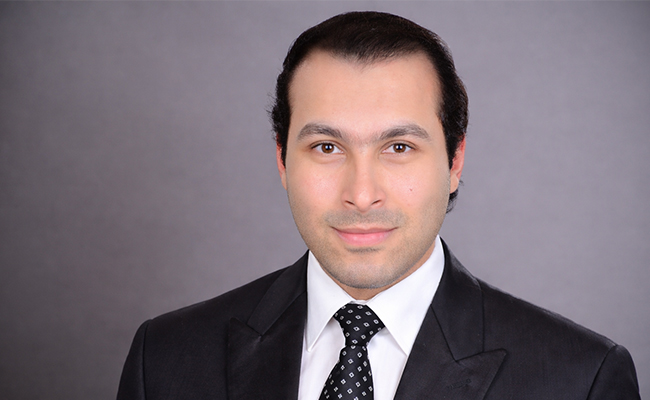
Mostafa Youssef, FHEA Senior Advisor for Academics, Learning and Development Office of the Provost The British University in Egypt, Egypt
In an era marked by rapid societal change, persistent inequities and profound technological disruption, higher education stands at a pivotal crossroads. Universities are no longer simply places that confer credentials; they are dynamic engines of societal transformation, shaping identities, economies and global futures. Yet this transformation is neither uniform nor guaranteed—it demands intentional leadership, robust professional learning cultures and structural alignment across policy, practice and institutional strategy.
At The British University in Egypt (BUE) , these demands are being met with resolute commitment. Through strategic alignment with global frameworks like the Advance HE Professional Standards Framework (PSF) and deep integration of professional development in academic careers, BUE exemplifies how transformative change in higher education can be realized in ways that are contextually grounded, globally relevant and pedagogically innovative.
Transformational Context: Challenges and Opportunities in Higher Education
Universities globally are confronting a meta-challenge: how to remain relevant, equitable and future-ready in the face of accelerating change. Transformation in higher education encompasses shifts in societal expectations, student learning needs, technological landscapes and institutional structures. Literature in educational leadership depicts this transformation as both complex and systemic. Organizational change research in higher education underscores that leadership is central to navigating both disruption and opportunity—not only through vision setting, but through cultivating cultures that enable shared learning, adaptive capacity and distributed leadership across academic communities.
Simultaneously, the rise of Education 4.0 , with its emphasis on personalized, digital-mediated and competency-based learning, demands faculty competencies that stretch well beyond traditional pedagogies. Recent studies highlight that faculty members are not merely adopting new tools but transforming their professional identities to better support global connectivity, equity-focused teaching and digitally enriched learning environments.
Within this broader scholarly conversation, the role of professional development emerges as a linchpin. Systematic research affirms that high quality, sustained faculty development enhances instructional effectiveness and is strongly linked to improved student learning outcomes. Yet, for many institutions, professional learning still remains fragmented, lacking clear strategic integration with institutional missions and career pathways.
Advance HE and BUE: A Strategic Convergence for Teaching Excellence
The partnership between BUE and Advance HE has catalyzed a strategic leap into this new terrain of higher education transformation. Advance HE’s PSF provides both a shared language and benchmarked pathway for recognizing excellence in teaching, leadership and scholarly practice. For BUE, embedding the PSF within institutional professional development has created a coherent ecosystem where academic staff are supported not merely to perform, but to reflect, innovate and evolve in their teaching practice—a critical marker of transformation in the era of Education 4.0.
The university’s strong uptake of Associate Fellowship (AFHEA), Fellowship (FHEA) and Senior Fellowship (SFHEA) among its faculty signifies more than professional certification; it signifies a culture of inquiry and collective advancement where educators are actively engaging with evidence-based pedagogy, reflective practice, inclusive design and student-centered learning.
This alignment is mirrored in BUE’s institutional s trategy , which places continuous professional development and career progression at the heart of academic excellence goals, including measurable annual increases in Advance HE Fellowship applications and the development of structured academic professional development programs.
Moreover, BUE’s strategy emphasizes the creation of communities of practice that support knowledge exchange, peer mentoring and collaborative innovation—in essence, turning theory into practice and practice into institutional identity. A burgeoning fellowship community fosters not only individual accomplishment, but also institutional coherence around quality teaching and student success.
Bridging Contexts: Aligning Local Impact with Global Dialogue
The Egyptian higher education context itself is undergoing notable transformation. National visions, such as Egypt Vision 2030 , underscore priorities like internationalization, skills-driven curricula, research capacity and global competitiveness. In this milieu, institutions that can strategically bridge local relevance with global standards are best positioned to lead systemic change.
BUE, as a dual-degree institution operating within Egyptian and UK frameworks, is uniquely poised to act as such a bridge. Its membership and active participation in organizations like Advance HE and the Magna Charta Universitatum reaffirm its commitment to universal academic values and global collaboration. This positioning enables BUE to contribute meaningfully to the Egyptian agenda for higher education reform while also engaging in international discussions on pedagogical excellence and academic leadership.
In addition to institutional strategy, BUE’s engagement with Advance HE extends to regional dialogues on transformation through initiatives like Elevate MENA , which connects educators across the Middle East and North Africa to collectively address the challenges and opportunities of education in the digital age—from AI integration to curriculum redesign and student success strategies.
Leadership as Practice: Cultivating Agency and Innovation
Central to this transformation is the notion that leadership in higher education is not solely vested in titles or offices; it is manifested through practice, influence and a sustained commitment to improvement. In higher education leadership literature, the shift from hierarchical models to distributed, practice-based leadership reflects a broader understanding of how academic communities navigate change and complexity.
This approach resonates deeply with the Advance HE model of Fellowship, which recognizes professional influence, scholarly teaching and educational leadership as distributed capacities that emerge throughout an institution. When faculty members engage with these frameworks, they are not simply meeting criteria; they are participating in the co-creation of institutional culture—a culture that is responsive, evidence-informed and future-focused.
At BUE, this leadership as practice is evident in how academic staff engage in reflective teaching portfolios, peer-led workshops and strategic initiatives that integrate pedagogy with technology, assessment innovation and inclusive practices. Through this work, leadership becomes a living practice, woven into the routines of teaching, learning and academic citizenship.
A Transformative Path Forward
Transformation in higher education is neither an abstract ideal nor a one-off reform. It is a continuing evolution, informed by global change, anchored in local relevance and sustained through professional practice. The work being done at BUE, especially in alignment with Advance HE frameworks, illustrates a compelling model for how universities can build teaching excellence ecosystems , nurture lifelong learners among their staff and shape learning environments that prepare students for an increasingly complex, interconnected world.
As institutions globally grapple with transformation, the insights emerging from BUE offer both practical strategies and inspiring testimony: that when clarity of purpose, strategic alignment and a commitment to professional growth converge, transformation becomes a lived reality—one that enhances the work of educators, the learning of students and the societal contribution of the university itself.